Angilbert (fl. ca. 840/50), On the Battle Which was Fought at Fontenoy

The Law of Christians is broken,
Blood by the hands of hell profusely shed like rain,
And the throat of Cerberus bellows songs of joy.

Angelbertus, Versus de Bella que fuit acta Fontaneto

Fracta est lex christianorum
Sanguinis proluvio, unde manus inferorum,
gaudet gula Cerberi.
Showing posts with label Immanuel Kant. Show all posts

Wednesday, August 4, 2010

Cardinal Mercier and the Natural Law, Part 11: Excursus on Kantian Duty

IN A PRIOR POSTING, WE OBSERVED that moral duty was universal, absolute, and necessary, and Mercier's theory of natural law abides by these. Kant accepted the challenge that moral duty had to be universal, absolute, and necessary. However, Kant did not believe that anything universal, absolute, and necessary could be derived from experience, from phenomena. In his view, moral obligation had to have its source from some principle that preceded, that did not rely upon, any contingent experience. In sum, it had to be something a priori in form. Something totally independent from our senses, from our experiences, even from our loves. It hovered about us sort of like the sun without our first seeing its light, feeling its warmth, or experiencing the orange wash of its rising halloo, the burnishing rays of its daily reign, and the roseate rays of its evening aquittance.

Brain in a Jar: Symbol of Kant's Categorical Imperative

This cool, inorganic principle of logic, better fitted for machines than for men, and so which is not to be found in flesh, but only in naked mind, a mind as it were pulled out from the skull of man in placed, like Broca's brain, in a jar of formalin at the Musée de l'Homme, is the categorical imperative:
What is this pure form which has no empirical connexions and in consequence is along [according to Kant] of being universal and necessary? It is the principle: 'Act as if the maxim from which you act were to become through your will a universal law of nature', or 'Act in accordance with a maxim which can serve as universal law'.
[247-48(55)] In Kant's moral theory, the will must not allow itself to be swayed, wooed, informed by anything other than this categorical imperative. The will must be independent of any desire, motive, but the naked categorical imperative. Only thus, shed of any desire of flesh and friendship, any matronly solicitude, any paternal love, can the will be said to be truly autonomous, self-determining, free and thereby virtuous. Sound inclinations--which play such an important role in the theories of natural law--are to be banished from Kantian ethics.

Similarly to be banished from Kantian ethics is any notion of incentive and reward, or hope of it of punishment or even fear of punishment. These extrinsic motivators sully the pure categorical imperative which alone must be our guide.

But Mercier rejects the Kantian system. "The categorical imperative," he insists, "is no moral standard by which good and evil may be distinguished, nor is it a true moral law." "Moreover," Mercier continues, "the principles on which Kant bases his argument are false." [249(56)]. Why so?

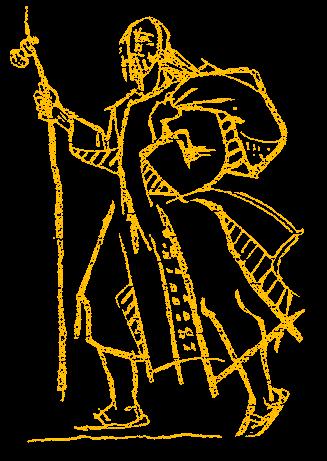
Mercier's argument against the categorical imperative is based upon the definition of "moral rule." "By its definition," Mercier begins, "a moral rule is a practical judgment, and therefore a judgment concerning the relation of an act with its end." [249(56)] The Kantian theory of a moral act, however, disposes of ends. "Consequently," the Kantian theory of morality "makes any relation of an act to an end impossible and therefore rules out any true norm of morality." We are left, hobbling, without a bourne, a crippled pilgrim, without scrip or staff, and, worse, without place of pilgrimage. So, this much vaunted Kantian autonomy is the same as assaulting a pilgrim and leaving him dazed, senseless, and lost, and then calling him free. From natural law pilgrim to Kantian beggar. That's Kantian autonomy.

It is really inconceivable that a moral law should be built upon the lack of any legitimate end, without a final cause.
Obligation which is the essential note of a law, is a certain necessity, put upon the will, of freely acting in a determined way. But it is inconceivable that the will should be drawn to act except by a final cause, that is, by the representation of a good to be willed. Hence the categorical imperative which claims to exclude all real final causes from the sphere of the moral will cannot produce any real obligation and consequently is not a law in the proper sense.
[249(56)] Mercier further rejects the notion that universality and necessity, both of which are characteristics of moral obligation, cannot be derived from experience, "when these are put to the service of the spiritual faculties of man's soul." In other words, experience alone may not be sufficient, but will and reason may be able to distill from experience such principles of universality and necessity.

Another flaw that Mercier sees in Kantian ethics is that it sees human nature to be its own end, and that therefore complete autonomy can be predicated upon such human nature. However, human nature must have an end outside of itself, namely God. And the moment that man's end is not man himself, but God, the notion of a complete autonomy of human nature collapses.

Finally, Mercier rejects the notion that reason demands that we not pay heed or even follow the "natural inclination we experience towards the enjoyment of our happiness." While true that this desire should be "rightly directed," that the inclination must be sound, for it to be "compatible with the highest standard of morality of which human nature is capable," that requirement of right direction or soundness does not allow us to reject any desire or any inclination whatsoever. In other words, the desires or inclinations, while not absolute, are subordinately good. So long as they are subordinate or ordered to our summum bonum or finis ultimus they can be secondary, but no less real, motives. "Our love," Mercier concludes, "when perfectly ordered seeks God, our objective end, primarily and above all things, and secondarily that subjective happiness which results from the possession of God." [249(56)] We will find our own good in God, our own happiness in God. It would seem philosophically unhinged, schizophrenic even, to suggest that we must reject our own happiness in pursuing God, when God is nothing but our assured happiness.

The categorical imperative is, perhaps, the last thought of a dying brain as it is placed in a jar of formalin to be gawked at by Museum guests, an opportunity purchased with the sum of some Euros. It wonders how, robbed of body and spirit and condemned to a jar of formalin, it will henceforward be good. How can it answer that question when it is not even really human? Do we really want to be taught morality from a brain in a jar which can never leave the room?


Wouldn't we rather learn it from a wizened guide, who knows the way to where we are going, even if he does have to lean on a stick? Some things, St. Augustine tells us, and I suppose Kant (who virtually never left his town of Königsberg) forgot, are learned by walking. Solvitur ambulando. We have to both walk, and know where to go. That's the real categorical imperative.

Tuesday, July 20, 2010

Tripartedness of Man's Nature and His Law

IT WOULD SEEM VIRTUALLY INARGUABLE that there is a natural law. It is implied by every positive law, by the fact that we argue over such positive laws' justice, whether they ought to be passed or amended, or even whether and when they ought to be obeyed. It is really only stubborn unwillingness to face the consequent of the natural law (that we may be answerable to something other than ourselves, God perhaps) that makes some men stubbornly refuse to acknowledge the natural law's existence. The consequent that some find unattractive is that man is limited, is constrained by his very nature. He cannot do as he like without fault. But that he may be limited by nature is not a limitation on his freedom. For man can like what he ought not like; he can like things that contradict his very nature. He is a creature who, as a result of his free will, can defeat his own nature, his own purpose, assault his very nature and so is open to self-injure or self slaughter. Man does not like to hear "no," even though the "no" is what keeps him in the "yes," sort of like the curbs or side rails keep one on the road. Some people, I am not quite sure why (the mystery of iniquity), like to ride off-road, and invariably end up in a ditch or worse.

"[N]othing would be right by [positive] enactment if some things were not right by nature." Simon, 118. In his treatment of the natural law, Simon explores a bit further the meanings of the word "right," ius. Like the word "law," lex, it is a word with rich implications and equivocal though related uses (i.e., analogical). The principle meaning of right or ius (or jus) is "that which is right, the thing that is right, the objective right," what Aristotle would call τὸ δίκαιον, or Cicero would refer to as justum. This is tautological, but fundamental.

Another meaning of "right" is more directly related to law. "That which is right is always such, in some way or other by reason of a law." There is a sort of confusion caused by this link between law and right, because the law by reason of which what is objectively right is also called ius or jus in Latin. That use of the word is carried over in most European languages, so we have the word Recht in German, droit in French, diritto in Italian, derecho in Spanish. The word plays therefore a dual role. In English, on the other hand, that concept is carried by the word "law," and so English is particular in parting the first meaning of ius (the right) with the second meaning of ius (the law underlying the right), and it putting the second meaning under the auspices of the word law. What all this means is that the English word "law," instead of the word "right" carries a dual role that it does not have in the other mentioned languages.
This famous particularity of the English language has probably exercised considerable influence on the Anglo-Saxon way of thinking about juridical (or legal matters. What is called the study of jus, Recht, droit, diritto, derecho, is not called the study of right in English, but the study of law. A whole library could be filled with controversies as to whether it is felicitous or not that one and the same word, "law," should be used to express the two ideas which are expressed in Latin by ius and lex, in German Recht and Gesetz, in French by droit and loi, in Italian by diritto and legge, in Spanish by derecho and ley.
Simon, 119.

The third meaning of ius, Recht, droit, diritto, derecho, in English "right," is "the legally recognized and sanctioned claim or faculty to do this or not do do that." This is a post-law notion of "right," which translates to being a "claim or a faculty" which is resident "in a person, or in a community, to whom something is due," and so may be "described as a good, as a service, or as a freedom to do or not to do." Simon, 120. This use of the word "right," which arises subsequent to law is entirely distinct from the other uses of the word "right." The use of the word "right" in this sense, not as the thing which is right, nor as that which is objectively right, but as that which a person can claim as due to him or her by reason of contract, or of positive law, or by custom, or even by nature is of relatively recent origin. Whether it was felicitous that the same word "right" was selected to describe something distinct is really beside the point, since by this day and age this use of the word "right" as claim due to one is too entrenched to change. We must suffer it, and the difficulties in thinking and communication is poses.

Going back to the first use of the term "right" as "that which is right," Simon insists that there are things that are right by nature. "The right by nature . . . would be that which is right by reason of what the things are. In other words, if some things are right by nature, that implies that a law exists in the nature of things." Simon, 120. And here Simon confronts the big division between the physical and moral worlds, both of which would appear to carry the same implication: that there are some things that are right by nature, and so imply that there is a law in the nature of things physical and things moral. So Simon considers "first the unity and then the contrast in the expressions "natural law" and "law of nature," the first by convention used to speak of the moral world, the latter by convention used to speak of the physical world.

Admittedly, there has not been absolute consistency in the use of these terms as referring to the physical world or the moral world. Often enough, the word "law of nature" is used in moral contexts, and the words "natural law" are used in physical contexts. And these are not two absolutely distinct worlds anyhow. There is substantial overlap between the physical and moral worlds, at least in man, and so we simply have to deal with the vagaries in human language. One, however, must recognize that, in man, there is a large area where the "law of nature" in terms of physical law overlaps with the "natural law" in terms of moral law, and it is a false dualism to propose that the physical nature of man has no meaning to his moral nature. It is a false division that was introduced largely by Kant. What Descartes did in dividing the world of matter from the world of soul, Kant did in dividing the physical world from the moral (and intellectual) world. The idealistic philosophies such as that of Kant, "sharpen the contrast between the universe of nature and the universe of morality." Simon, 121. And improperly so.

The Two Worlds in Which Man Moves

Eppur si muove, Signor Kant. The contrast between physical and moral worlds, as Simon notes, "is not so complete" as Kant would have it and would parcel it. Simon, 121.
[M]an, after all, also has a nature; man resembles other things inasmuch as he also has a nature. There is an interior, an immanent law of operation which connects the universe of mankind with the universe of physical nature. Indeed, laws of the physical kind extend to a number of aspects of man. . . . [and being] antecedent to free choice . . . these things . . . belong to the universe of nature. . . . What is particular about the natural law of man, of the moral world, is that essentially it operates through free choice. It exists as a rule inherent indeed in the nature of things bu which does not direct operation in determinate fashion. It governs behavior through judgment and through free choice.
Simon, 122. So man straddles two worlds: the physical and moral world, and, though they may be distinguished, they are, in reality, not entirely separate. There is a physical part. There is a moral part. There is a part that is both physical and moral. The physical informs the moral. The moral informs the physical. Man is one, not two, though there are two aspects to his unity.

Because of man's unique or particular nature, the natural law as it pertains to him may be divided into three divisions according to Simon. The first two divisions of natural law relate principally, but not entirely, to the physical world. Whereas the third division relates principally, but again not entirely, to the moral world.

The first division stems from the fact that "there are in man tendencies which he has in common with all things, above all, the tendency to keep existing." Simon, 123. Simon here invokes the words of Baruch Spinoza: "Every being strives to persevere in being." [Ethics, III, 6] (Conatus, quo unaquaeque res in suo esse perseverare conatur).

The second division relates to "inclinations that man has in common with animals."
Here man communes in a sense with all living nature, but more particularly with the animal nature, since both in man and in many animal species there is some infrarational control of these inclinations. Included in this division are the matters of sex in general, the association of male and female, the care of offspring.
The third division relates to "the inclinations proper to rational beings." It is perhaps the richest, and includes a panoply of human institutions and inclinations: the requirements of life in society, the desire to search and know the truth, to worship God, to express oneself, the problem of obedience, of government, etc.

The Three-Fold Division of Natural Law in Man

This three-fold division in man results in an all-encompassing view of the natural law:
Thus everything that is right by nature [in man] is right either because the universal nature of being is such, or because the universal nature of animal is such, or because the rational nature is such. This threefold classification insures the community between the natural law of the moral world and the natural law of the physical world, no matter how sharply these laws may be contrasted in some respects. After all, man is part of this universe; after all, man has a nature.
Simon, 124.

The theory of natural law is decidedly not Kantian. In practice, Kant placed a huge divide in physico-moral man, a huge intellectual cut between his physical and animal natures and his rational nature. "[T]he most constant tendency of Kant and the Kantian tradition is to strengthen, bring forth, overdo, render overwhelming, if not theoretically exclusive, the contrast between the universe of nature and the universe of morality." Simon, 124-25. The advocate of natural law is absolutely open to the three-in-oneness, the tripartedness yet essential unity of man.
The natural law of the moral world is immanent in a person by reason of his being a being, by reason of his being an animal, and by reason of his being a rational agent with inclinations, tendencies, aspirations which cannot be arbitrarily chosen. Concerning human behavior . . . it is by judgment and by choice that we act either according to or at variance with the inclinations of being the inclinations of the animal nature, and the inclinations of the rational nature.
Simon, 125.

Wednesday, June 30, 2010

The Disfigured Face: The Unholy Trinity: Immanuel Kant

IF JOHN LOCKE WAS THE "FATHER OF LIBERALISM," IMMANUEL KANT was the "Father of Deontological Ethics" or the "Father of Autonomy." In the Pantheon of the Modern Thought, Kant is the Doctor Deontologicus, the Deontological Doctor, or perhaps the Doctor Imperativi, the Doctor of the Imperative, since his ethics are both based upon duty and command. What this, of course, means is that he is opposed to an ontological ethic. Kant's ethics are based on duty, on command, and they are not based on being or existence. In the face of growing individualism in ethics, Kant tried to derive some universal rules that were based on reason alone, but not in any sense on nature. "[F]or Kant, right does not conform to an ontological order, but rather to a rational order." Cortest, 54. He rejected the virtues, as not sufficiently exact, for he strained for moral rules "with mathematical exactitude" (mit mathematischer Genauigkeit). Virtues were too messy. Nature was to messy. Things like the "Golden Rule" were too messy. (See The Golden Rule in Immanuel Kant: The Golden Rule But a Footnote.) Reality was too messy, and we couldn't be sure we understood it anyway. In Kant's view, this "mathematical exactitude" (mathematischer Genauigkeit) based on a pure reason distilled of nature or being, was "more important than any deeper principle of being or truth," or inherited tradition or revealed religion. Cortest, 54. This search for universal rules to govern ethics based upon pure reason alone ultimately lead to his absolute categorical imperatives.
Kant's philosophy begins with a critique of traditional metaphysical thought. This is the very reason why his doctrine of right (jus) is entirely deontological. The older Aristotelian-Thomistic moral philosophy is based on an ontological foundation. With Kant, the science of being is divorced from morality. The new foundation for morality becomes reason itself. Reason [alone] serves as the starting point and establishes the limits for moral reasoning. The participants in Kant's moral universe are guided by reason rather than by nature. Individual human beings act in accord with universal principles rather than through a sense of natural or intrinsic good.
Cortest, 55 (emphasis added). To his credit, Kant was a strong advocate of moral freedom, and his deontological ethic had some sense of nobility and beauty about it in its zeal for justice. There is something lovely, wistful in the saying: "For if justice goes, there is no longer any value in human beings living on the earth." Wenn die Gerechtigkeit untergeht, so hat es keinen Werth mehr, daß Menschen auf Erden leben. Yet there is a certain harshness about Kant, and he seems to exclude the role of mercy and of love. (The phenomenologist Max Scheler criticized Kantian imperative ethics because it excludes behaviors that someone in authority, whether it be God or man, cannot order but only woo, such as mercy and love and faith. He also criticized it for being overly pragmatic and finding moral value only in those areas where change can be accomplished by order or command. Wherever Kant has been one hears the plaint: Where, oh where has supererogation gone? Oh where oh where can it be?) That is why Kant shudders at the thought of anyone who dares compromise the "law of punishment," which for Kant is one of his "categorical imperative."
Woe to him who crawls through the windings of eudaimonism [Aristotelianism? Thomism?] in order to discover something [mercy? love?] that releases the criminal from punishment or even reduces its amount by the advantage it promises . . .
(Cortest, quoting Metaphysics of Morals [Wehe dem! welcher die Schlangenwindungen der Glückseligkeitslehre durchkriecht, um etwas aufzufinden, was durch den Vortheil,den es verspricht, ihn von der Strafe, oder auch nur einem Grade derselben entbinde . . . .] Similarly, before society disbands, it would have a duty to put all the criminals found guilty of capital offenses to death. "Clearly, Kant defends a hard-line position on this question; this is so because for Kant, matters of justice must have a universal application." Cortest, 57. This is done through the use of absolute, exceptionless imperatives. Command, command, command; duty, duty, duty. This is a dry, external ethic. Compared to the ontological ethic, it is like eating sand instead of steak. With this irrepressible impulse to enforce law at all costs, we ought to be very thankful that God is not Kant, and that Kant was not God.

Immanuel Kant

Cortest then addresses the interaction of Locke and Kant, and their particular contributions to the project of Modernity:
It is clear that what begins as the defense of personal freedom in Locke is transformed by Kant into a system of absolute imperatives, in which the personal becomes the universal. Perhaps the best way to understand this transformation is to imagine that while Locke "freed" the individual from tradition, Kant made the now autonomous individual, through a set of rational principles, the foundation of justice and right. More than any other innovation in his moral philosophy the feature the most characterizes Kant's thought is this emphasis on autonomy. . . . This notion of moral autonomy may well be one of the most important developments in the history of modern ethics. Indeed, this doctrine is one of the features that most characterizes the thinking we call "modern."
Cortest, 58. (We have treated the issue of Kant's notion of autonomy in our prior posting: Ecstasis and Telos: Immanuel Kant and Selflaw.)

In his For an Ontology of Morals: A Critique of Contemporary Ethical Theory (Evanston, Ill.: Northwestern University Press, 1971), Henry Veatch criticizes Kant's anti-ontological ethical theory. Though the quote is rather long, it merits being posted:
So long as Kant is either unwilling or unable to recognize the possibility that a natural desire may nonetheless be a reasoned desire and thus determined by nothing less than a knowledge of the good, he must renounce altogether any and all attempts to provide an ontological basis for ethics in terms of a thing's nature, be it human nature or the nature of rational beings generally. But the question returns to plague the Kantians more persistently than ever: how can one possibly come to know the moral laws that are incumbent upon us as rational beings if appeal is not to be made to the nature of such beings by way of support? So far as we have been able to determine, the only way that a Kantian can answer this question is by attempting to appeal not to the nature of rational beings, bur rather to the purely formal requirements that presumably must attach to moral laws, insofar as these laws are held to be binding on all rational creatures.
Now, Locke the Liberal had made morality a matter of personal choice. The duty-above-all-else Kant had fitted this personal ethic into a system of static universal imperatives based upon reason alone. Hegel was to take these two and adds the component of development or evolution, as man, in his view was to find his increasing self-awareness by incorporation into the State. That will be the subject of our next posting.

Wednesday, May 26, 2010

By Nature Equal: How Are Men Created Equal? Kant Can't But Cant About Natural Law

KANT IS QUITE AN IMPOSING FELLOW, and he has had remarkable influence in the annals of the Academe around the globe, though he virtually never left his beloved Königsberg. How such a parochial little man, a bachelor with impeccable chronological habits (people set their watches by his daily afternoon walks, so regular was he), became such a universal thinker and ushered in a revolution in thought is a remarkable thing. (We have treated some elements of Kantian thought in prior posts. See Ecstasis and Telos: Immanuel Kant and Selflaw and Golden Rule in Immanuel Kant: The Golden Rule But a Trivial Footnote.) Kant's contribution to the modern notions of equality are significant. As Coons and Brennan summarize it: "The modern literature on human equality--such as it is--is saturated with Kantian concepts." (p. 116) Indeed, one comes to the conclusion after reviewing this part of their work that Coons and Brennan are more Kantian than they are advocates of a traditional natural law.

Kant lived in a time when man was viewed as a machine in a mechanistic universe, a sort of tin man in a tin house with a tin heart. That should have bothered anyone with a heart of flesh, or even anyone with a mind. It's hard to tell whether this mechanistic philosophy bothered Kant's heart, but it certainly troubled this man's impressive mind. A mechanistic cog in a mechanistic cosmos means no morality, as it means everything is determined. A human with a Hobbesian "spring" or coil for a heart is more a robot that a man. This was something that did not settle well with Kant. And he put his mind to do something about it.

Easter Island Moai

Rather than seeing that man's heart was flesh and blood, with pinch of spiritual soul (a theology of the body!), Kant conceded to his contemporaries the mechanistic view of man, but he limited the mechanistic paradigm to the material, the phenomenal world. Then he posited a wholly ideal world, a world insulated from the empiricism of science, a noumenal world. Man was sort of like an Eastern Island statute, a moai, with his body hidden in the phenomenal world, but his mind in the world of the noumena. Man was both determined and free, determined in the phenomenal world, but free in the noumenal world. Man knew one world, the noumenal, but not the other, the phenomenal, since one could never know any thing as it really was (the ding an sich was unknowable), one only knew what one thought the thing really was. Kant therefore advanced a notion that there were, in the phrase of Professor Roger J. Sullivan, "two viewpoints," a material and an ideal, and never would the twain meet. Indeed, we did not really know reality, either moral or speculative, but we should act as if (als ob) we did.
Kant uses these same two viewpoints in his moral writings. On the one hand, he regards the natural world as amoral and any effort to base morality on empirical, contingent grounds as futile. Nature is just what free moral agents must transcend. Yet, on the other hand, he uses what he calls the principle of "physicoteleology" to interpret nature as purposive, with an essential role in helping us make moral judgments about human behavior. "In distributing her aptitudes, Nature has everywhere one to work in a purposive manner." "By a natural purpose [Naturzweck]," Kant explains, "I mean such a connection of the cause with an effect that, without attributing intelligence to the cause, we must yet conceive it by analogy with an intelligent cause and so as if it produced the effect purposefully."
Roger J. Sullivan, Immanuel Kant's Moral Theory (Cambridge: Cambridge University Press, 1995), 182. "Making sense of Kant's moral metaphysics, then, requires keeping clear this strange idea that man must regard himself as a pure other-worldly intelligence and, exactly thus, capable of autonomy." (p. 117). Though there is no proof of it in the world about him, he can find the basis for morality in the mind that is within him, which is what gives him his autonomy.

Marble Bust of an Aging Immanuel Kant

To his credit, Kant did not view this autonomy as completely lawless. For Kant, there was a law, but it was law as the mind understood it, not law per se. And Kant's law was no longer natural, because it made no reference to man's hylomorphic or dual nature. (Indeed, it did not give reference even to God.) Kant wholly ignored the material in man's nature (there was no end, no purpose; the Humean dogma under which he slumbered told him there was no "ought" to be found in an "is"), and based his law entirely on pure reason alone. Kant's law was noumenal, not phenomenal.
Man is capable of morality exactly because his "true self" is not only free but also under a law. That law is pure reason--reason functioning on its own terms, without the influences of man's phenomenal side.
(p. 117) In a way, this all is a bit deceptive, because Kant did not advocate that we were under a law, but that we were under an idea of law. This is because ultimately, in Kant's view, this law is not the law itself, as man cannot know the law as it is. This is only law as man understands that law to be. As Kant wrote in his Groundwork of the Metaphysics of Morals:
A law has to carry with it absolute necessity if it is to be valid morally--valid, that is, as a ground of obligation .. . . the ground of obligation must be looked for, not in the nature of man nor in the circumstances of the world in which he is placed, but solely a prior in the concept of pure reason.
. . . .
Everything in nature works in accordance with laws. Only a rational being has the power to act in accordance with his ideas of laws--that is, in accordance with principles--and only so has he a will . . . the will is noting but practical reason.
(quoted in Coons and Brannon, 290 nn. 31, 32) So whatever this law is, it is not natural, and it is not law; it is our idea of the law. In other words, we are following a figmentive law, based upon reason alone, and we ought to act as if it exists, though we have no proof for it. The law that this reason imposes upon us, and under whose discipline we must live to live moral lives, is the categorical imperative.

Coons and Brennan construe Kant's philosophy as a philosophy that meets with the criteria they have established as necessary for building their notion of human equality (indeed they seem to admit later that the convention of human equality they tout stems from Kant). Kant believes that rational human beings have the capacity to choose freely to pursue or reject the details of correct behavior, that there exists a preinstitutional order of morality, that moral self-perfection is obtained through the diligent pursuit of seeking it, and that rational persons possess that capacity to make that effort, and possess that capacity uniformly. Though Kant's emphasis on reason in the moral life of man suggests a lack of uniformity in degree, Coons and Brennan believe that "at curtain time Kant seems to settle on conditions of morality that make virtue possible for every rational person." (p. 118)

Coons and Brennan therefore believe that Kant is preeminently a moral philosopher that advances a morality of good intentions that has a good fit with their notion of human equality. They quote Kant's comment in his Metaphysics of Morals in this regard:
It is a human being's duty to strive for [moral] perfection, but not to reach it (in this life), and his compliance with this duty can, accordingly, consist only in continual progress.
(p. 119) For Coons and Brennan, then, Kant is sufficiently emphatic on the centrality of intention, yet sufficiently attentive to a notion of pre-institutional morality [the categorical imperative] so as to fit with their analysis of what is required by the convention of human equality. Their ultimate conclusion is that Kant meets the criteria for identifying the host property of human equality, importance, goodness, laterality, singularity, and uniformity.

They admit that the only reason there is a fit between Kant and their notion of the convention of human equality is that "Kant broke decidedly with the tradition." (p. 119) It was Kant's emphasis on good will, and good will alone, that constitute this break. They quote extensively from Kant's Groundwork of Morals:
The good will is not good because of what it effects or accomplishes or because of its adequacy to achieve some proposed end; it is good only because of its willing, i.e., it is good of itself. . . . Even if it should happen that, by a particularly unfortunate fate or by the niggardly provision of a stepmotherly nature, this will should be wholly lacking in power to accomplish its purpose, and if even the greatest effort should not avail it to achieve anything of its end, and if there remained only the good will . . . , it would sparkle like a jewel in its own right, as something that had its full worth in itself.
(p. 119) And now begin the Kantian encomia and the colors of Coons and Brennan are revealed. Thus Coons and Brennan conclude: "Kant satisfies the criterion of uniformity by making morality pivot on an act of which everyone is equally capable: committing to duty and then pursuing its terms as best as one can." (p. 119) "Kant's ethics is a thoroughgoing morality of equals, supported by a tailor-made metaphysics." (p. 120) "The Kantian capacity for a 'good will' is believable as a host property for a relation of equality . . . ." (p. 120) "Kant does what no earlier philosopher had managed: he separates the highest form of human achievement, moral goodness or the 'good will,' from every other form of human good. That separation is absolutely critical to human equality. . . . The belief in factual human equality requires a belief in some nonempirical human capacity for a nonempirical form of human goodness. . . This belief is not at all exotic; indeed, this is the element of Kantianism that, we think, has passed into the common mind (or vice versa)." (p. 121) (emphasis added)

This disappoints. One is left with the sinking feeling that Coons and Brennan are more Kantian than traditionalist, and this will become even more apparent when they themselves compare the convention of human equality they have touted with the traditional notions of the natural law. We will explore these in our next few blog postings.

Sunday, June 21, 2009

Ecstasis and Telos: Immanuel Kant and Selflaw

FOR A MAN THAT NEVER TRAVELED more than 100 miles from his home town of Köningsberg, the philosopher Immanuel Kant's (1724-1804) effect on the world of ideas was massive. With his publication of his Critique of Pure Reason in 1781, he effected what has been called the "Copernican Revolution" of philosophy. His contributions in the field of moral philosophy and law have likewise been immense. As Rommen puts it in his book The Natural Law, Kant was "the watershed from which flow so many and such varied streams of modern thought." Rommen, 83. If Kant's moral and legal philosophy found in such complex texts such as The Philosophy of Law, the Introduction to the Metaphysic of Morals, and his Critique of Practical Reason could be boiled down to a small kernel without serious injustice to the thought, it would be "autonomy," selflaw. Kant "exhibits in his philosophy the individualist natural law in its final, highest form,"Rommen, 88, but this law is so distilled of any notion of ecstasis and telos that it is no longer recognizable as law. It is the law one gives to oneself. It is absolutely autonomous, nay, more, it is anti-heteronomous, as it positively excludes any outside source of the law--even to the point of excluding Nature and Nature's God. Kant's morality is, in a way, the complete antithesis of Natural Law.


To understand Kant, one must recall Descartes's mechanistic view of nature and the Baconian rejection of a final and formal cause in nature. This is because, as Levering says, "Kant returns firmly to Descartes's project, which he advances." Levering, 117. Informed by philosophical nominalism, Bacon insisted that the notion of a final cause (or telos) in nature was a muzzle on true science that had to be discarded "The final cause rather corrupts than advances the sciences." Bacon, Novum Organon, aph. 3. Similarly, the notion of a formal cause, or an understanding of the "form" or "nature" of a thing, was useless. To exercise power over nature, man had to limit his analysis of nature to material causes only. "Matter rather than forms should be the object of our attention . . . ." Nature, as it were, had to be put to torture and put on the rack. Similarly, Descartes rejected the notion of a final cause. "The entire class of causes which people customarily derive from a thing's 'end,' I judge to be utterly useless in Physics." Descartes, Meditation 4. Matter was "dead," it had no principle of life outside mechanics that could be perfectly transcribed into mathematical equations. Coupled with this mechanistic view of nature was Descartes's extreme dualistic view of man, where man was a detached spiritual mind almost jailed in his material body. As a result of this deprecation of the body and the body/soul union, Descartes viewed the will and not reason as the preeminent human good. As he stated in a letter to Christina of Sweden:"Now freewill is in itself the noblest thing we can have because it makes us in a certain manner equal to God . . ." It was an apotheosis of will that proved regnant in Cartesian philosophy. So on the one side was a mechanical cosmos with no purpose, the res extensae, the extended order of things. On the other was the human mind or soul, the thinking thing or res cogitans.

Kant then stood on the shoulders of Bacon and Descartes. And there he was confronted with Hume's skepticism. It was Hume and his skepticism which "interrupted" Kant's "dogmatic slumbers." (Kant, Prolegomena to Any Future Metaphysics) Kant sought a means around the Humean skeptic fence that barred reason from knowing the good, and made reason slave to his passions. Kant's efforts at preserving the Cartesian mechanistic view of nature while yet overcoming Hume's radical skepticism required a severe restraint on reason, both theoretical and practical. Reason could not know the things in themselves (ding an sich), it only knew the appearances of the things in the mind as informed by sense data. "I had to do away with knowledge," Kant said in his Critique of Pure Reason, "to make room for faith." Kant may have better said "emasculate" or "amputate" Reason. And what kind of faith did he allow for?


In the area of morality, three notions were placed outside of pure reason's grasp by Kant: freedom, the immortality of the soul, and the existence of God who will reward the good and punish the evil. Kant maintained that none of these could be proved by reason (as they could also be disproved), and in his famous antinomies, Kant both proves and disproves the existence and non-existence of these three truths. So Kant shows with equal rigor that the world had a beginning in time, and no beginning in time. Through reason, Kant shows that it can be argued that the world is both made of composite substances made of simple substances, and that no composite substance is made of simple substances. He shows that there is free will, and that there is not free will, but all things are fastly determined. Kant argues that there must be a necessary Being, and then again that no such Being exists. Kant's point in his antinomies is not that these things don't exist, but that they are beyond the pale of reason. To accept them required faith. We had to act "as if" the soul was free and immortal, and there was a God who rewarded good and punished evil (als ob ein Gott sei), as if there were a reason or an end though, in fact, we must disabuse ourselves of the belief that these can be gleaned by reason. The God of Kant's faith was safely insulated from Reason's and the World's assault, and from Hume's skepticism, but that meant that God had only a presence in human consciousness and not in the worlds of Nature and Reason. For Kant, the cosmos is without God, and God is without being, an emasculated God. God is only in our minds. This is not the God to which we pray, "I believe, help Thou my unbelief!" It is a God that is marginalized, compartamentalized, housed in a Ghetto. (Unfortunately, once confined to our minds, this God in our minds becomes very pliable, as we shall see.)

So God deftly out of the way: "What is to be done, if the will is free, if there is a God, and if there is a future world?" asks Kant. (Kant, Critique of Pure Reason). The answer is given in Kant's moral philosophy, and Kant here applies as radical a critique as he did in regards to theoretical reason. First, Kant rejected any role of human nature in determining good and evil. Kant rejected the role of natural inclinations or desire for happiness as containing anything of importance to the question of the good. In fact, these inclinations and desires worked against the preeminent determinant of good: a good will informed by duty alone. In an effort to overcome Hume's guillotine (his "is"-"ought" argument), Kant jettisoned Nature like he did Reason. For Kant, a good will is most pure when it goes against inclinations or desires. It is most pure when it follows a categorical imperative: "Do this!" and not a conditional imperative, "If you want to be good or be happy, do this!" (Kant, Groundwork of Morals)

For Kant, therefore, (and like any good Cartesian) morality is solely within, in the will. In Kant's view, the human will has two main components. First, it is a self-caused movement. Second, it is a rational power that uses universal concepts. Accordingly, the purity with which the will moves itself (outside of any inclination or desire) and the universality of the rational imperative is what makes the will good. For Kant, the chiefest universal law is what he called the "categorical imperative." "Act only according to the maxim by which you can will at the same time that it becomes a universal law." (Kant, Groundwork of Morals) The categorical imperative is the highest law because it is pure command and most universal. It references no matter, no nature, no happiness, not even God; it is pure and uncorrupted.

When the will acts in accordance with the categorical imperative, the human will will reject any other law outside of the imperative. Duty is solipsistic. It looks towards itself, it never looks outside itself, it judges for itself. Therefore, the will legislates for itself. We have the law of one. The will, to be free and good, must become autonomous. "The will is not simply subject to the law, but subject in such a way that it must also be considered as self-legislative and for this reason, at the very first, subject to the law whose author it can consider itself to be." (Kant, Groundwork of Morals) Therefore the person is autonomous, not heteronomous. A person must be like a greek city--a polis--that issues its own laws out of its own sovereignty (auto-nomos), and not a city that relies on another city with jurisdiction to issue laws (hetero-nomos). The person must act in accordance with the imperative (autonomy) unmoved, uninfluenced by any desire or inclination for good or evil encountered in external experience (heteronomy). As Michael Waldstein summarizes it:
I am autonomous when I will what I will without being motivated by any good or evil, that is, when I move myself according to the categorical imperative. I fall into heteronomy when I will something because it is good. In heteronomy, I degrade my will and make it a servant of my internal desires. I reach autonomy and freedom only when my will is completely independent from the whole sphere of appearances based on received sense-data, 'for, independence of the determining causes of the world of sens (and independence which reason must always claim for itself) is freedom.'
Waldstein, 50 (quoting Kant, Groundwork of Morals).

Well that certainly takes care of Hume. But at what expense?

As Pierre Manent summarizes it: "At last [man] can think what until that time he could only will: he can now think that he is neither a creature of God nor a part of Nature, that he is in short born of himself, the child of his own liberty." (Manent, The City of Man (Princeton: Princeton University Press, 1998), 189 (quoted in Levering, 119 n. 178). According to Kant, a rational being achieves greatest dignity when it "obeys no law except the law which it simultaneously gives to itself." Kant, Groundwork of Morals. Autonomy and freedom are the highest goods, not obedience to a law that is wise or good or that may lead us to happiness or union with God. Thus in a masterful sophistry, Kant baptizes as the good autonomy and its necessary concomitant: disobedience to any externally-imposed law. More, because each person is completely autonomous, each deserves dignity, and each becomes his own law, and his own end:
For what end (quem in finem) does [man] exist? His existence has the highest purpose in itself . . . It is only in man, and in man only as the subject of morality, that an unconditioned legislation concerning purposes can be found, which thus enables him alone to be a final purpose to which the whole of nature is teleologically subordinated.
(Kant, Critique of Judgment) Waldstein summarizes what Kant has proposed: "Each and every person is the final end of the whole of nature. There are as many final ends as there are persons." Waldstein, 51-52. This principle of autonomy is also reflected in Kant's political philosophy, which views government's task not as promoting any good, but as protecting autonomous individual's rights. Government's role is not to promote the happiness of its citizens, but to promote the rights of its citizens. Government is no-wise to be paternal (imperium paternale); rather, it is to be patriotic (imperium non paternale, sed patrioticum). Pace George F. Will, Statecraft is not Soulcraft. Indeed, counterintuitively, the "greatest despotism imaginable" is a government that desires and promotes the good of its citizens, more despotic, presumably, that a government which does not intend the good of its citizens, but rules them for its own ends. Waldstein, 52-53.

The distance of Kant's moral philosophy from that of Natural Law and Scripture is at once apparent. Indeed, as Waldstein notes, Kant's notions of autonomism and disdain of any dependence contradict the very heart of The Lord's Prayer: Pater noster, qui est in caelis, . . . fiat voluntas tua . . . panem nostrum quotidianum da nobis hodie . . . Our Father, who art in heaven . . . thy will be done . . . give us this day our daily bread . . . . The Lord's Prayer implies a heteronomous relationship with God in which we find freedom; we are not our own, but both our beginning and our in are in God. One wonders how sincerely Kant prayed the Vater Unser, one wonders if he could without wincing.

It is Kant to whom credit is given for separating law and morals, ethics and law, by separating law and its external compulsion from notions of the inner freedom or moral autonomy of the individual person. Rommen, 88-89. This separation was so severe, that for Kant "[t]he legal order is devoid of moral character." Rommen, 90. As Pierre Manent puts it:
[Man] flees the law that is given to him and seeks the law he gives himself. He flees the law given to him by nature, by God, or that he gave himself yesterday and that today weights on him like the law of another. He seeks the law he gives himself and without which he would be but the plaything of nature, of God, or of his own past. The law he seeks ceaselessly and continuously becomes the law he flees. In flight and in pursuit, with the difference of these two laws always before him, modern man proceeds in this way to the continual creation of what he calls History. In this enterprise, the nature of man is his principal enemy.
Manent, 204 quoted in Levering, 120, n. 178.

We could perhaps adapt Kipling's famous words in his "Ballad of East and West": Oh law is law, and morals is morals, and never the twain shall meet. The excessive separation between law and morals has led more than one person, even such redoubtable and diverse thinkers such as Ayn Rand and Hannah Arendt, to link Kant's ideas to Hitler and Eichmann. Whatever the link in factum esse, it is true that neither the evil and original Hitler or the evil and banal Eichmann would have been possible had German society held fast to a Natural Law jurisprudence. Ideas have consequences; and bad ideas have bad consequences.

We will close by quoting Kant. "Two things fill the mind with ever new and increasing admiration and awe, the more often and steadily we reflect upon them," said Kant, "the starry heavens above me and the moral law within me." Zwei Dinge erfüllen das Gemüt mit immer neuer und zunehmender Bewunderung und Ehrfurcht, je öfter und anhaltender sich das Nachdenken damit beschäftigt: der bestirnte Himmel über mir und das moralische Gesetz in mir.

Stars and duty, not God above or God within. John Paul II is supposed to have remarked about Kant in the context of his wrestling with Kant's thought: Kant! Mein Gott! Kant! Kant! My God! Kant! (Weigel, Witness to Hope (New York: Harper Collins, 1999), 128). It was as if John Paul II, in an unguarded moment, were challenging Kant from his very grave to turn his gaze from the lesser deities of stars and of duty to his God, the God of Abraham, Isaac, and Jacob. The God that became Man in Christ Jesus and taught us to pray . . . .


Note: These reflections rely heavily on Michael Waldstein's masterful summary of Kant's moral philosophy in John Paul II, Man and Woman He Created Them: A Theology of the Body (Boston: Pauline Books, 2006), 34-54.

Wednesday, June 10, 2009

Natural Law: Ecstasis and Telos

ETIAMSI DAREMUS . . . NON ESSE DEUM. These temerarious but still tenuously introduced words in the introduction (Prolegomena) of Hugo Grotius's treatise De iure belli ac pacis (1625) symbolize a historical phenomenon of which anyone who studies the Natural Law must be aware. In this treatise on international relations, Grotius (1583-1645), commonly called the "Father of International Law" (although the title could equally be claimed by the Spaniard and Catholic Vittoria), relied on the doctrine of the Natural Law. Though the Dutch Grotius was himself a Christian [of Protestant bent, he wrote an apologetic of Christianity in Dutch, Vewisjs van den waren Godsdienst (1622) which was translated into Latin as De veritate religionis Christianae (1627)], he argued that the Natural Law would bind us etiamsi daremus . . . non esse Deum, even if "we dare to say there is no God." It is true that the Natural Law binds all men, including the Atheist, and if understood in this manner, there is no controversy to what was said. But Grotius's etiamsi is indicative of something in the air a little more subtle, and a little more ominous. It is perhaps the first shoot, the first flowering of a Natural Law theory wholly unmoored from the notion of God, if such a theory is even tenable. It was the maturation of trend of turning away from God being the measure of all things to a Protagorean man is the measure of all things. In his classic The Natural Law: A Study in Legal and Social History (Indianapolis: Liberty Fund, 1988), the historian of Natural Law, Henrich Rommen, identifies Grotius as the "turning point." The "turn," however, started much earlier than Grotius.


In his excellent book Biblical Natural Law (Oxford: Oxford University Press, 2008), Matthew Levering, an Associate Professor of Theology at Ave Maria University, discusses this "turn" from a theocentric notion of Natural Law to an anthropocentric notion of Natural Law. According to Matthew Levering, two things are required for a wholesome (and also Biblical, i.e., consistent with Revelation) theory of Natural Law. The first he calls ecstasis. The second he calls teleology.

What do these words mean? Ecstasis is the transliteration of a Greek word ekstasis or ἔκστασις. It means to "extend outwards" to "stretch out." It is the word from which we derive the English word ecstasy. It is used here for the desire of union with the Divine. This ecstasis need not be religious in origin, though it most often is. For example, the neo-Platonic philosopher Plotinus, no Christian himself, in his Enneads speaks of his ecstasis, his virtual experience of union, with his philosophic notion of God which was based upon a natural theology. The term ecstasis was readily adopted by Christians to describe the union with the Trinity. Levering's point is that the Natural Law must recognize ecstasis, a desire for union with God, which means that our lives on earth are ordered to God.


The second requirement that Levering argues is required for an adequate theory of Natural Law is a teleology of nature. The word teleology is a technical word derived from a combination of two Greek words: telos (τέλος), which means "end", "purpose", or "goal," and logos (λόγος), a word which means "reason" or "word." For example, in the Gospel of Christ Christ is referred to as the Logos of God, the Word or Reason (logos) of God. John 1:1. In St. Paul's letter to the Romans, Christ is also referred to the end (telos) of the Law. Rom. 10:4. As applied to Nature, a teleological view would include the concept that God created nature, including the nature of man, and that He did so with a plan, a purpose, an end, a reason in view.

In short, requiring a theory of Natural Law to possess a notion of ecstasis and a notion of teleological nature means that God is both the origin and the end of things, including man. God is the alpha (A), He is the omega (Ω), the first and last letters of the Greek alphabet, and the first and last letters of the Natural Law. Put another way, the requirement that a theory of Natural Law include notions of ecstasis and notions of teleology in nature mean that a theory of Natural Law must presuppose Eternal Law.

The traditional or classical notion of Natural Law includes both notions of ecstasis and teleology in nature. This notion of Natural Law found its most mature expression among the Stoics, e.g., Cicero, and was advocated in modified form by the Church, e.g., in St. Augustine and St. Thomas Aquinas, as consonant with, and in fact revealed in, Scripture and Tradition. Many modern theories of the Natural Law shun notions of ecstasis. They turn not outward to God (ecstasis), but wholly inward (in what may be called an entasis) to man. Though a turning inward to man is not fatal to a theory of the Natural Law (in fact it would be part of our discovery of our nature), it is when this turning inward is exclusive or in opposition to the turning outward to God that it becomes a problematic to a theory of Natural Law.

The story of how the Natural Law came to be progressively emancipated from its theological roots is a long one, and there are many controversial points about it, for example who initiated the process, and whether the arguments made to justify such emancipation are valid or not. Regardless, Levering calls this disassociation from of the Natural Law from its original theological roots the "Anthropocentric Turn" or "Anthropocentric Shift." He wrests out eight individuals from history to make his point. And for the next series of reflection we will rely on his choices: Renè Descartes, Thomas Hobbes, John Locke, David Hume, Jean-Jacques Rousseau, Immanuel Kant, George W. F. Hegel, and Friederich Nietzsche. There are many others Levering could have chosen (e.g., Ockham, Scotus, Machiavelli, or Luther). Though these may (or may not) have been believers in various shades, the "natural law" of Messrs. Hobbes, Hume, Locke, Rousseau, Kant, and Hegel is not the Natural Law. These gentlemen's ideas are already on the way out of the Porch (Stoa) or the Church (Ekklesia) , and in some instances completely out of the Porch or the Church into the Wilderness.

To a greater or lesser degree, each of these men rejected the notion of ecstasis and teleology in nature. In some cases, there was no apparent rejection, but some of their presuppositions would lead to or implied such rejection. Each played a part in the Western world's turning from God as the measure of all things, including Law, to Man as the measure of all things, in particular Law. Some of their notions have prevailed and are assumed in modern culture, and we have to be aware of them in order to understand better the Natural Law, to reject these ideas, or to respond to them.