Angilbert (fl. ca. 840/50), On the Battle Which was Fought at Fontenoy

The Law of Christians is broken,
Blood by the hands of hell profusely shed like rain,
And the throat of Cerberus bellows songs of joy.

Angelbertus, Versus de Bella que fuit acta Fontaneto

Fracta est lex christianorum
Sanguinis proluvio, unde manus inferorum,
gaudet gula Cerberi.
Showing posts with label Utilitarianism and Natural Law. Show all posts

Friday, December 3, 2010

Utilitarian Failure: C. S. Lewis and the Natural Law

IN DEPARTING FROM THE WAY WHEN EDUCATING THE YOUNG and lapsing into the slough of relativism and subjectivism one is assuring the eventual destruction of society. Strictly speaking, perhaps, the fact that a certain doctrine will lead to the demise of society does not speak as to its untruth. Contrariwise, the fact that a certain doctrine works does not assure its conformity with truth. Pragmatic sanction is not necessarily the seal of truth. "The true doctrine might be a doctrine which if we accept we die." Abolition, 27. If truth were to lead to our demise, then reality would be a cruel joke, to be sure, and the hopeless existentialists such as Sartre could all be right. We just need to man up and take it. It might be our fate to pray to Zeus in the manner of the ancient Greeks who were awash in the determinism of fate, of μοῖρα, moira. The world, and its God--if he be Zeus not Yahweh--may be hostile to us:
ἐν δὲ φάει καὶ ὄλεσσον.*

In the light do thou e'en slay us.
Homer, Iliad, XVII.647. But there is a curious inconsistency in the liberal mind. While it rejects absolute norms and the existence of an objective reality to which the mind and morals ought to conform, a "Reason" behind "reason," and therefore rejects a purpose or end to the entire structure of reality, it has the audacity to promote an end of its own. The doctrine of liberalism is therefore overwhelmingly hypocritical. It says one thing and does another. They claim to be free of doctrinal bias, all the while they have a doctrinal bias of their own. The talk about "progress" or "enlightenment" or "evolving" begs the question: progress to, enlightenment with, evolving towards what? What is the liberal ineluctable good which liberals deny everyone else? It is simply an "uncritical dogmatism," a "system of values which happen[] to be in vogue," which is anti-tradition, anti-religion, anti-natural law. Ultimately, the dogmatism of the liberal rests on absurdity.


The Subjectivist, Relativist Liberal Hoisted by the Humean Petard


Since the liberal rejects the notion of the Tao or the natural law as providing a reason for doing things, or eminently as being even part of reality and Reason itself, the liberal must seek for the basis of the good elsewhere. Lewis explores this and finds the subjectivism of the liberal wanting in foundation. He uses the Horatian sentiment: dulce et decorum est pro patria mori as the "experimentum crucis,"** How does the liberal argue to the fellow liberal that he ought to die for the good of his country?

The first possibility is the notion of the useful. Perhaps the good is based upon utility: "'Good', he might say, 'means what is useful to the community.'" Abolition, 30. Death is not useful to the community, so what must be meant is death of an individual is useful to the community. And we may grant the premises as true in fact. It may be factual that the death of one man saves many. Why then should any one man sacrifice himself for the others? On the liberal premise, one cannot appeal to those sentiments, central to the Tao, that are based upon an objective order (pride, honor, shame, love, etc.) and thus are "natural" to us but cannot be strictly ascribed to "pure reasoning." Why should one man sacrifice himself for the community and not another man? Isn't it as equally "rational" that another man (and not me) sacrifice himself for the community's good? Selfishness seems more rationally justifiable than altruism if the Tao is not to be taken into account. Refusal to sacrifice, then, seems equally as rational as sacrifice. Why is this the case? It is the case because the liberal is hoisted by his own petard. The Humean Guillotine kills the liberal: one cannot build value on utilitarian fact:

From propositions about fact alone no practical conclusion can ever be drawn. This will preserve society cannot lead to do this except by the mediation of society ought to be preserved. This will cost you your life cannot lead directly to do not do this: it can lead to it only through a felt desire or an acknowledged duty of self-preservation. The Innovator [i.e., the liberal if he bases his ethic on some sort of utilitarian or consequentialist reasoning] is trying to get a conclusion in the imperative mood out of premises in the indicative mood: and though he continues trying to all eternity he cannot succeed, for the thing is impossible.

Abolition, 32-33. The Tao, of course, would add the oughtness and make it part of the entire reasoning process. But far be it from the liberal to acknowledge his mistake. So from the "rational" and "enlightened" utilitarian principles which have failed him, where does he turn? Perhaps to instinct?

(continued)
_____________________________
*Homer, Iliad, XVII.647. (My text, published by Harper, has: 'εν δε φαει και 'δλεσσου, which appears to be a misprint. Apparently, the editor did not know Greek!)
**The term experimentum crucis means "crucial experiment" or "critical experiment." It is a term that is given to an experiment that decisively determines the superiority of one hypothesis or theory to all other hypotheses or theories whose acceptance commonly held by others in the community.

Wednesday, October 27, 2010

Contra Consequentialismum: Skeptical of Skepticism

SKEPTICISM ABOUT THE OBJECTIVE NATURE of good and evil, right and wrong--moral skepticism--runs rampant in the Western world. Advance the notion of objective right and wrong in any conversation, or insist on an absolute exceptionless rule, and people become unsettled, and they tune you off, even ridicule you as an obscurantist, since such a position seems to be contrary to the primary virtues of the day: open-mindedness, tolerance, pluralism, relativism. But moral theory--which concerns itself with right and wrong--would be a poor science indeed (and it claims to be a science, though obviously not an empirical or experimental science such as chemistry or sociology) if its subject matter--moral right and wrong--were so amorphous and shapeless, so unbased upon reality, as to have no objective, intelligible substance; or if its method, teachings, and expression were irreparably and fundamentally nothing but an expression of the proponent's subjective opinion. If morality is like poetry or like painting, then it is not a science, and it yields not knowledge, but is an art at best. If morality is based upon nothing else but subjective feeling, then it is analogous to the Eucharist being just a symbol, and not the Real Presence of Christ. "Well, if it’s a symbol, to hell with it," the writer Flannery O'Connor famously said. And if morality is not based upon objective reality, if there really is not an objective, real moral world, a moral realm "out there" or "within us," then to hell with morality! That's, of course, what relativists and moral skeptics basically say.

As an applied science, moral knowledge (not necessarily behavior) ought to progress or converge upon truth, advancing from relative ignorance, and there ought to be significant agreement among its adepts as to proper teaching. If it doesn't move towards greater knowledge and agreement, then its lack of progress or the lack of agreement ought to be able to be explained. That people generally disbelieve that moral knowledge has progressed or converges upon truths and its advocates have reached consensus is the result of a prevailing spirit of moral skepticism.

Moral skepticism denies the existence of objective right and wrong--which necessarily means it advances moral relativism: all moral thought is relative, there is no one single truth on the matter that all must hold with regard to the good and the right. Wrested away from modern biases, or perhaps better, ideologies, however, the case for an objective moral reality is very strong. And the case against moral skepticism is unanswerable, since, from an intellectual point of view, moral skepticism is intellectually baseless.* In other words, modernly, we have put ourselves in the shade of skepticism, and so are unable to appreciate the light of objective moral truths. Moderns are blinded by irrational bias; they are diseased with the cancer of skepticism and have made the foolish diagnosis that the cancer is the healthy tissue, and the healthy tissue is diseased.

Though moral knowledge is objectively-based, true knowledge, it would be wrong to expect it to be as precise as, geometry or chemistry. A "crucial point, one made by Aristotle" long ago, must be kept in mind by us moderns: "every science is only as precise as its subject matter allows." Oderberg, MT, 3. Moral theory, by its very nature, is therefore inexact, often, though not always, dealing with probable or approximate answers.** But being inexact is not equivalent to being unknowable. We ought not be misled by the inexactitude of moral knowledge:

There is an essential element of inexactitude in moral theory, corresponding to the elusiveness and unfathomability of man of the predicaments people find themselves in. It stems also from the mysterious depths of the human soul, with its often dimly understood thicket of motivations, desires, beliefs, and emotions. . . . The moral theories should minimize these where possible, but they cannot be eliminated and should indeed be welcomed as indicators that morality is about people, not machines.

Oderberg, MT, 4. Moral knowledge is also hampered by social influences, personal desires, prevailing ideology, in ways that the empirical sciences are not (though empirical sciences are not absolutely immune from these influences either).*** Moral knowledge, then, is knowledge about what is right and wrong, good and evil. It is applied or practical knowledge, that is, it tells us how we should act to do right and advance the good, to avoid doing wrong and so shun evil. It informs us how to be good humans. If one is a moral "realist," then morality is "real," and there is a "moral realm" which is real, true, objective, intelligible, and binding upon us.


David Hume, Empirical Philosopher and Advocate of the "Natural Fallacy"

The modern penchant toward rejecting moral realism and instead adopting a moral skepticism is largely the result of the "empiricist tradition in philosophy." Oderberg, MT, 9. One of the most significant sources of modern moral skepticism is the critique of moral knowledge resulting from the fact-value distinction (also called the naturalistic fallacy, "is/ought" distinction, or Hume's guillotine).
The distinction finds its classic statement in the philosophy of David Hume: He famously remarked: 'In every system of morality, which I have hitherto met with, I have always remarked that the author . . . makes observations concerning human affairs; when of a sudden I am surprised to find, that instead of the usual . . . propositions, is, and is not, I meet with no proposition that is not connected with an ought, or an ought not.'
Oderberg, MT, 9 (quoting Hume's Treatise on Human Nature, III.I.I). The fact-value distinction states that it is logically wrong to jump from fact (is) to obligation or value (ought). Since moral matters involve obligations and duties (oughts and ought nots), they cannot be based on fact. (ises or is nots). And so they must be based upon something else, choose your poison: perhaps feeling, tastes, emotions, in any event, something other than fact. Since facts are the only objective reality (and the only basis for sciences, narrowly understood empirically) it follows, Hume insists, that morality is not about objective reality. So teaches Hume, and the whole Western world seemed to have swallowed Hume's pill. Ingemuit totus orbis, et Humeanum se esse miratus est. The modern world groaned and has found itself Humean. Has swallowing Hume's pill been wise or foolish?

Foolish. Foolish because the advocates of the fact-value distinction have put themselves on the horns of a dilemma which reflects the absurdity of their main philosophical tenet regarding the moral world. The dilemma comes from their understanding of "fact." They have to define "fact" to exclude "ethical facts," but in doing so they simply beg the question, that is, avoid the confrontation of the "ethical realist"** who insists that there are such things as "ethical facts." So how can they argue with the ethical realist to prove that the Humean position that all there are is empirical fact is the assumption to make? "If the skeptic about moral facts wants to use the notion of a fact to cast doubt on [moral] realism, then, he must not rely on a conception that the moral realist does not share in the first place." There are no givens shared by the Humeans and the non-Humeans from which argument between them can be based. So where does the Humean go to establish his argument?

Humeans in fact, are doom to fail based upon their presuppositions. There is no empirical "fact" that exists to which the Humeans can point to that "ethical facts" do not exist. Where, in the concrete reality they say is the entirety of reality, is the fact that says there is no such thing as an ethical realm? To argue that empirical facts are the entirety of reality, and that moral or ethical facts are not facts, the Humeans must leave the empirical world of empirical facts, thus disproving their insistence that all there are are empirical facts. The Humeans, in other words, are in the predicament of having to prove (from empirical fact alone) the proposition that "one ought not to believe in ethical facts, but only in empirical facts," but to argue such a proposition they violate their basic assumption by having to depart the world of empirical facts. In other words, there is no way for them to prove, given their assumptions, that there are no such things as "ethical facts." They can only endeavor to prove their assumption by violating it. Their fundamental oughtness that all there is is isness cannot be proved from the fundamental assumption that all there is is isness. Hence their dilemma.


Empirically, Reason Why One Gives Alms Doesn't Exist


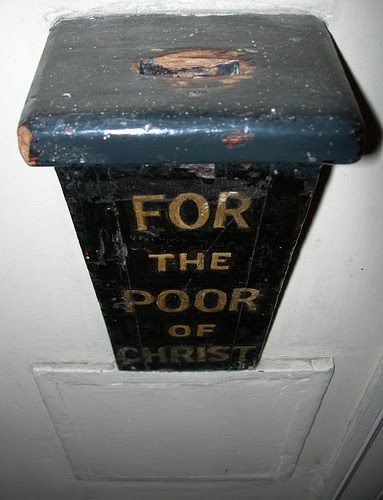
There is, however, more. The Humean assumption that only empirical facts exist poses real problems, as it excludes a whole demimonde of facts we routinely accept as description of reality. "[T]he distinction [between fact and value] does imply an unbridgeable conceptual gap between facts and values--but the cost of forging it, for the Humean, is that he loses his grip on reality." Oderberg, MT, 13. In his insistence on empirical reality, the Humean loses out on the reality of things like human intent, or human assessment. The Humean, sort of like Oedipus but for less noble reasons, blinds himself, gouges out his eyes, and then suggests he sees better than the rest of folks. He is Aesop's fox without a tail, arguing to his fellows that tails are cumbersome extremities. Therefore, Hume can empirically equate the sapling growing up and overtaking its parent tree robbing it of the sun, to a son being ungrateful or even a son killing his father. For a Humean, the "relations are the same." Both descriptions of the event, from an empirical point of view, are identical in the Humean world looked at with gouged-out eyes. Empiricism cannot distinguish the obvious difference between the two. The Humean cannot distinguish between the man who gives alms in charity and the man who gives alms in vanity: empirically, they are both doing the same thing: putting money in the poor box. The Humean world clearly involves "a radically impoverished apprehension of reality; not [only] an impoverished conception of morality, but of what exactly is going on." Oderberg, MT, 14. It is a Humean trait to describe abortion as the "termination of pregnancy," instead of murder. It is a Humean trait to describe lies as "misstatements" or being "economical with the truth." The world of reality extends far beyond the Humean world of empirical fact:

With a more complete appreciation of reality, there will still be a distinction between facts and values; there will still be a way of describing the world that only pays attention, say, to microphysics, to chemistry, to the movements of particles, to the interaction of objects, to pure cause an effect, and so on. But these descriptions will only capture a segment of reality, one which has a definite but limited place in ethical theory.

Oderberg, MT, 15. In other words, the moral realist can accept empiricism while yet recognizing that there is an entire reality outside of it; the moral realist can see (he has not gouged out his intellectual eyes like the Humean Oedipus, though he may see enough figuratively to pluck one of his eyes out so that he does not get cast into Hell if that eye causes him to sin, cf. Matt. 5:29; 18:9; Mark 9:47). The moral realists can see that empiricism, while valuable in its sphere, fails to describe the entirety of reality. Empiricism can only describe a part, a small part, and perhaps the least important part of the cosmos. It is wholly blind to the pearls of great price which are seen in the moral realm.
_________________________________
*Since true philosophical and moral knowledge (e.g., the existence of God, the existence of objective moral truth) is based upon certain self-evident principles, which cannot be certainly proved, as by definition self-evident principles cannot be proved; however, with enough patience and effort, any thought that rejects such self-evident principles can be shown to be certainly false, baseless, or lead to absurdity.
**Hence the fight among probabilists, probabliorists, and equiprobabilists.
***See Mark Walker, ed., Science and Ideology: A Comparative History (New York: Routledge, 2003).