
NATURE ANSWERS THE POET'S QUERY regarding the nature of Desire with a poem in elegiac meter. Desire (cupido) or cupidity is equated with love (amor not caritas), and its largely irrational character is emphasized by the paradoxes through which it operates and in which it seems to relish. Nature ends her description of Desire on some practical advice on how to avoid Venus and her child, Desire.
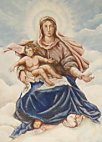
 Venus and Amor (Cupid) by Hans Holbein the Younger
Desire, Venus's child, is thus a false, or more accurately, unreliable or traitorous friend. Desire is an oxymoronic guide, both sharp and dull, in character. Desire is a paradoxical compass. It is both the unnatural natural and the natural unnatural in us, and is both unnaturally natural and naturally unnatural in its promptings and in its effects. That is why, a few lines later, Nature notes that Desire "is connected with me by a certain bond of true consanguinity," ipse mihi quadam germanae consanguinitatis fibula connectatur. Its basic or fundamental nature is, if it remains within its proper bounds, good, honestate. The problem with Desire is that it seems to elbow everything else out. It oversteps its natural boundaries in excessive ardor, and so what should but but a tiny flame, a scintilla, turns into a destructive conflagration. What should be a tiny stream, a fonticulus, turns out to be a torrent, torrentem. To flee Desire, one must flee his mother Venus. Desire must be restrained with the "bridle of moderation," frenis modestiae, it must be checked with the "reins of temperance," habenis temperantiae. It is not desire that is vicious, but excess desire, a desire not in accord with temperate mean, that is vicious. "For every excess interferes with the progress that comes from the temperateness of the mean and distension from unhealthy surfeit swells and causes what we may call the ulcers of vice." Quoniam omnis excessus, temperatae mediocritatis incessum disturbat, et abundantiae morbidae inflatio quasi in quaedam apostemata vitiorum exuberat.
Nature then returns to the intended role of Venus, in particular in the area of sex. Nature explains that when she made Venus her subagent, she provided her with a workshop of many anvils, (incudis) and two approved hammers (duos legitimos malleos) one hammer specifically for man, and the other for the rest of the creation. These hammers were to be the tools of Venus, the tools of an interested Providence to overcome disinterested Fate. With them she was to be faithful to God's forms. Venus was not to allow "the hammers to stray away from the anvils in any form of deviation." Venus was also provided with a pen to trace the classes of things, and with which she was to f0llow the blueprints of the forms by which things were to be made. Venus was not to deviate from the norms of orthography "into the byways of pseudography," in falsigraphiae devio. And it was understood that the propagation of the various species was to be accomplished by the joinder of two genders, and that this was to be accomplished within regular constructions of the art of Grammar.
(continued)
| Love is peace joined to hatred, Loyalty to treachery, Hope to fear and madness blended with reason. It is sweet shipwreck, light burden, pleasing Charybdis, Sound debility, insatiate hunger, hungry satiety, thirst when filled with water,deceptive pleasure, happy sadness, joy full of sorrow, delightful misfortune, unfortunate delight, sweetness bitter to its own taste. Its odour is savoury, Its savour is insipid. It is a pleasing storm, a lightsome night, a lightless day, a living death, a dying life, a pleasant misery, pardonable sin, sinful pardon, sportive punishment, pious misdeed, nay, sweet crime, changeable pastime, unchangeable mockery, weak strength, stationary movable, mover of the stationary, irrational reason, foolish wisdom, gloomy success, tearful laughter, tiring rest, pleasant hell, gloomy paradise, delightful prison, spring-like Winter, wintry Spring, misfortune. It is a hideous worm of the mind which the one in royal purple feels and which does not pass by the simple cloak of the beggar. Does not Desire, performing many miracles, to use antiphrasis, change the shapes of all mankind? Though monk and adulterer are opposite terms, he forces both of these to exist together in the same subject. When his fury rages, Scylla lays aside her fury and Nero begins to be the good Aeneas, Paris sword flashes, Tydeus grows soft with love, Nestor becomes a youth, Milcerta becomes an old man. Thersites begs Paris for his beauty and Davus begs the beauty of Adonis, who is totally transfromed into Davus. The wealthy Croesus is in need; Codrus, the beggar, abounds in wealth. Bavius produces poems, Maro's muse grows dull; Enius makes speeches and Marcus is silent. Ulysses becomes foolish, Ajax in his madness grows wise. The one who formerly won the victory by dealing with the tricks of Antaeus, though he subdues all other monsters, is overcome by this one. If this madness sickens a woman's mind, she rushes into any and every crime and on her own initiative, too. Anticipating the hand of fate, a daughter treacherously slays a father, a sister slays a brother, or a wife, a husband. Thus by aphairesis she wrongly shortens her husband's body when with stealthy sword she cuts off his head. The mother herself is forced to forget the name of mother and, while she is giving birth, is laying snares for her offspring. A son is astonished to encounter a stepmother as his mother and to find treachery where there should be loyalty, plots where there should be affection. Thus in Medea two names battle on equal terms when she desires to be mother and stepmother at the same time. When Byblis became too attached to Caunus, she could not be a sister or conduct herself as one. In the same way, too, Myrrha submitting herself too far to her father became a parent by her sire and a mother by her father. But why offer further instruction? Every lover is forced to become an item at Desire's auction and pays his dues to him. He carriers his warfare to all. His rule exempts practically no one. He lays everything low with the fury of his lightning stroke. Against his goodness, wisdom, grace of beauty, floods of riches, height of nobility will be of no avail. Deceit, trickery, fear, rage, madness, treachery, violence, delusion, gloom, find a hospitable home in his realms. Here reasonable procedure is to be without reason, moderation means lack of moderation, trustworthiness is not to be trustworthy. He offers what is sweet but adds what is bitter. He injects poison and brings what is noble to an evil end. He attracts by seducing, mocks with smiles, stings as he applies his salve, infects as he shows affection, hates as he loves. You can by yourself, however, restrain this madness, if you but flee; no more powerful antidote is available. If you wish to avoid Venus, avoid her places and times. Both place and time add fuel to her fire. If you follow, she keeps up the pursuit. By your flight she is put to flight. If you give ground, she gives ground. If you flee, she flees. | Pax odio, fraudique fides, spes juncta timori, est amor, et mistus cum ratione furor. Naufragium dulce, pondus leve, grata Charybdis, Incolumis languor, et satiata fames. Esuries satiens, sitis ebria, falsa voluptas, Tristities laeta, gaudia plena malis. Dulce malum, mala dulcedo, sibi dulcor amarus, Cujus odor sapidus, insipidusque sapor. Tempestas grata, nox lucida, lux tenebrosa, Mors vivens, moriens vita, suave malum. Peccatum veniae, venialis culpa, jocosa, Poena, pium facinus, imo, suave scelus. Instabilis ludus, stabilis delusio, robur Infirmum, firmum mobile, firma movens. Insipiens ratio, demens prudentia, tristis Prosperitas, risus flebilis, aegra quies. Mulcebris infernus, tristis paradisus, amoenus Carcer, hiems verna, ver hiemale, malum. Mentis atrox tinea, quam regis purpura sentit, Sed nec mendici praeterit illa togam. Nonne per antiphrasim, miracula multa Cupido Efficiens, hominum protheat omne genus. Dum furit iste furor, deponit Scylla furorem, Et pius Aeneas incipit esse Nero. Fulminat ense Paris, Tydeus mollescit amore, Fit Nestor juvenis, fitque Melincta senex. Thersites Paridem forma mendicat, Adonim Davus, et in Davum totus Adonis abit. Dives eget Crassus, Codrus et abundat egendo, Carmina dat Bavius, musa Maronis hebet. Ennius eloquitur, Marcusque silet; fit Ulysses Insipiens, Ajax desipiendo sapit. Qui prius auctorum solvendo sophismata vicit, Vincitur hoc monstro, caetera monstra domans. Quaelibet in facinus mulier decurrit, et ultro, Ejus si mentem morbidet iste furor, Nata patrem, fratremque soror, vel sponsa maritum Fraude necat, fati praeveniendo manum. Sicque per ascensum male syncopat illa mariti Corpus, furtivo dum metit ense caput. Cogitur ipsa parens nomen nescire parentis, In partuque dolos, dum parit ipsa parens. Filius in matre stupet invenisse novercam, Inque fide fraudes, in pietate dolos. Sic in Medea pariter duo nomina pugnant, Dum simul esse parens, atque noverca cupit. Nesciit esse soror, vel se servare sororem, Dum nimium Cauno Byblis amica fuit. Sic quoque Myrrha suo nimium subjecta parenti, In genitore parens, in patre mater erat. Sed quid plura docebo, Cupidinis ire sub hasta Cogitur omnis amans, juraque solvit ei. Militat in cunctis, ullum vix excipit hujus Regula, cuncta ferit fulmen et ira sui. In quem non poterit probitas, prudentia, formae Gratia, fluxus opum, nobilitatis apex. Furta, doli, metus, ira, furor, fraus, impetus, error, Tristities, hujus hospita regna tenent. Hic ratio, rationis egere, modoque carere Est modus, estque fides non habuisse fidem. Dulcia proponens assumit amara, venenum Infert, concludens optima fine malo. Allicit illiciens, ridens deridet, inungens Pungit, et afficiens inficit, odit amans. Ipse tamen poteris ipsum frenare dolorem, Si fugias, potior potio nulla datur. Si vitare velis Venerem, loca, tempora vita, Nam locus et tempus, pabula donat ei. Si tu persequeris, sequitur; fugiendo fugatur; Si cedis, cedit; si fugis, illa fugit. |
 Venus and Amor (Cupid) by Hans Holbein the Younger
Desire, Venus's child, is thus a false, or more accurately, unreliable or traitorous friend. Desire is an oxymoronic guide, both sharp and dull, in character. Desire is a paradoxical compass. It is both the unnatural natural and the natural unnatural in us, and is both unnaturally natural and naturally unnatural in its promptings and in its effects. That is why, a few lines later, Nature notes that Desire "is connected with me by a certain bond of true consanguinity," ipse mihi quadam germanae consanguinitatis fibula connectatur. Its basic or fundamental nature is, if it remains within its proper bounds, good, honestate. The problem with Desire is that it seems to elbow everything else out. It oversteps its natural boundaries in excessive ardor, and so what should but but a tiny flame, a scintilla, turns into a destructive conflagration. What should be a tiny stream, a fonticulus, turns out to be a torrent, torrentem. To flee Desire, one must flee his mother Venus. Desire must be restrained with the "bridle of moderation," frenis modestiae, it must be checked with the "reins of temperance," habenis temperantiae. It is not desire that is vicious, but excess desire, a desire not in accord with temperate mean, that is vicious. "For every excess interferes with the progress that comes from the temperateness of the mean and distension from unhealthy surfeit swells and causes what we may call the ulcers of vice." Quoniam omnis excessus, temperatae mediocritatis incessum disturbat, et abundantiae morbidae inflatio quasi in quaedam apostemata vitiorum exuberat.
Nature then returns to the intended role of Venus, in particular in the area of sex. Nature explains that when she made Venus her subagent, she provided her with a workshop of many anvils, (incudis) and two approved hammers (duos legitimos malleos) one hammer specifically for man, and the other for the rest of the creation. These hammers were to be the tools of Venus, the tools of an interested Providence to overcome disinterested Fate. With them she was to be faithful to God's forms. Venus was not to allow "the hammers to stray away from the anvils in any form of deviation." Venus was also provided with a pen to trace the classes of things, and with which she was to f0llow the blueprints of the forms by which things were to be made. Venus was not to deviate from the norms of orthography "into the byways of pseudography," in falsigraphiae devio. And it was understood that the propagation of the various species was to be accomplished by the joinder of two genders, and that this was to be accomplished within regular constructions of the art of Grammar.
| Since the plan of Nature gave special recognition, as the evidence of Grammar confirms, to genders, to wit, the masculine and feminine . . . I charged the Cyprian [Venus] with secret warnings and might, thunderous threats, that she should, as reason demanded, concentrate exclusively on the natural union of masculine and feminine gender. Since, by the demands of the conditions necessary for reproduction, the masculine joins the feminine to itself, if an irregular combination of members of the same sex should come into common practice, so that appurtenances of the same sex should be mutually connected, that combination would never be able to gain acceptance from me either as a means of procreation or as an aid to conception. For if the masculine gender, by a certain violence of unreasonable reason, should call for a gender entirely similar to itself, this bond and union will not be able to defend the flaw as any kind of graceful figure, but will bear the stain of an outlandish and unpardonable solecism. | Cum enim attestante grammatica, duo genera specialiter, masculinum et femininum, ratio naturae cognoverit . . . tamen Cypridi sub intimis admonitionibus minarum tonitru ingessi, ut in suis conjunctionibus ratione exigentiae, naturalem constructionem solummodo masculini femininique generis celebraret. Cum enim masculinum genus suum femininum exigentia habitudinis genialis adsciscat, si eorumdem generum constructio anomale celebretur, ut res ejusdem sexus sibi invicem construantur, illa quidem constructio nec evocationis remedio, vel conceptionis suffragio, apud me veniam poterit promereri. Si enim genus masculinum genus consimile quadam irrationabilis rationis deposcat injuria, nulla figurae honestate illa constructionis junctura vitium poterit excusare, sed inexcusabilis soloecismi monstruositate turpabitur. |
(continued)