
NEITHER IN UTILITARIAN FACT NOR IN FELT INSTINCT will a system of moral values be found. To seek an ought from a consequential fact or from an instinctive or psychological fact is doomed to failure. Moral values, the oughtness-engine that drives moral norms, can only be found in one place: the Tao or the natural law, and it traverses across cultures and history. For example, the Tao that forms the basis that it may be good to die for our country is found in the lips of man, sage, philosopher, and playwright, and even on the lips of God."This thing which I have called for convenience the Tao, and which others may call Natural Law or Traditional Morality or the First Principles of Practical Reason or the First Platitudes, is not one among a series of possible systems of value. It is the sole source of all value judgments."
--C. S. Lewis objective reality about him that informs value, simply cannot find any source for. Unless such fundamental expressions of the natural law are accepted as givens, as self-evident, "as being to the world of action what axioms are to the world of theory, you can have no practical principles whatever." Abolition, 40. The individual injunctions of the Tao are starting points, premises, and not conclusions derived from something yet more basic. The Tao is the fundamental oughtness from which all other norms of oughtness are deduced. An ought cannot be dismissed from reality, from its role in practical reason, because it cannot show a pedigree built upon an is. "If nothing is self-evident, nothing can be proved" in the world of theoretical or speculative reason. "Similarly if nothing is obligatory for its own sake, nothing is obligatory at all." Abolition, 40.
The moral feltness of the Tao may be confused with, perhaps even categorized as a sort of sentiment. If the Tao is categorized as sentiment, then sentiment ceases to be purely subjective and so it ought not to contrasted to rationality or reason. On the other hand, if the Tao is considered rational, then reason must be regarded as practical. Either sentiment must be broadened to include reason, or reason must be broadened to include the practical. However one views the Tao, it is the foundation from which all reasonable morality springs.
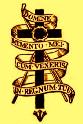
Abolition, 43-44. The Tao is simply part of reality, and to chose part of it and reject another part, or to reject all of it, is to engage in self-deception, to venture into the unreal. It is the very opposite of Ex umbris et imaginibus in veritatem: it is ex veritate in umbras et imagines.**

The Tao is Not Writ on Tablets of Stone
That is not to say that the Tao is like the Ten Commandments, writ in stone (or at least once writ in stone, and now writ on paper) or like the Leges Duodecim Tabularum, the Twelve Tables of the Law of the Romans, writ in gold tablets and placed in the center of the Forum Romanum for all to see and none to contest. No, the Tao is evidenced in a number of traditions, West and East, across time and place and culture, and with varying levels of insight and of purity. We may also find contradictions, or apparent contradictions, and opposing principles. Accordingly, the Tao requires an active and critical intellect, and so also allows for development, if not of the Tao itself, at least of our understanding of it:
"From within the Tao itself comes the only authority to modify the Tao. . . . Outside the Tao there is no ground for criticizing the Tao or anything else." Abolition, 47-48. It is the difference between being an Aristotle or a St. Thomas Aquinas or a Richard Hooker versus being a Hobbes or a Hume or a Nietzsche. It is the difference between being a Stoic or a Sophist and a Skeptic. We must therefore approach the Tao with some trepidation, some fear and trembling, in the matter of the Aristotelian σπουδαῖος (spoudaios), or man who lives rightly, what Lewis refers to as the "well-nurtured man, the cuor gentil." Abolition, 49. To be in one group of critics is entirely different from being found among the other group. In a rather vivid image:
Abolition, 46. It is the difference between being open minded in the area of conclusions and being open minded in the area of fundamental premises. "An open mind, in questions that are not ultimate is useful. But an open mind about the ultimate foundation either of Theoretical or Practical Reason is idiocy." Abolition, 48.
Since the scientific revolution, modern man has had a disposition, learned from Francis Bacon, to bind nature into servility, to hound her in her wanderings, and to put her on the rack and torture her for her secrets. The temptation to do so to the Tao is great, as modern man abhors any limits. Sapere audem. Dare to know. The Enlightenment's motto. Kant's creed. Why should modern man stop at the Tao? "Why not this? Why must our conquest of nature stop short, in stupid reverence, before this final and toughest bit of 'nature' which has hitherto been called the conscience of man?" Abolition, 50. The modern says in Nietzschean madness, in Sartrean hubris, and in full nonserviamic Satanic revolt: "Having mastered our environment, let us now master ourselves and choose our own destiny." Abolition, 51.
Giving the devil his due, Lewis cautiously states: "This is a very possible position." And at least it has the merit of not being inconsistent like that thinking of a man in the middle who debunks traditional ethics even while not casting it totally aside. It is not a lukewarm theory. It is not a theory hot with the Tao. It is a cold, bitter cold theory. The man who holds this is bold, nihilistic, and rejects the concept of value altogether. What do we say to the man who would make himself God, who would make himself a self-creator, an autonomous self-legislator, a judge of his own cause, whose errant libido sciendi may bribe the objectivity of his existence, his law, and his judgment?
_________________________________
*See Locke's Second Treatise of Civil Government (Chapter III.16): "By the fundamental law of nature, man being to be preserved as much as possible, when all cannot be preserved, the safety of the innocent is to be preferred: and one may destroy a man who makes war upon him, or has discovered an enmity to his being." A better quote would have been Lactantius? "Therefore humanity is to be preserved, if we wish rightly to be called men." Lactantius, The Divine Institutes, VI.11.
**Ex umbris et imaginibus in veritatem, which means out of the shades and imaginings into the truth (perhaps a reference to Plato's allegory of the cave) was the early motto of the recently-beatified John Henry Newman. The motto of the liberal (C. S. Lewis calls such a one as an Innovator) who rejects the Tao may be said to be exactly the opposite: ex veritate in umbras et imagines, out of the truth and into the shades and imaginings.
All within the four seas are his brothersHere are statements of the Tao traversing culture and time, statements of the natural law which the liberal subjectivist, so disdainful of an
四海之內、皆兄弟也
(Confucius, Analects, xii.5)
I am man: nothing human is foreign to me.
Homo sum: humani nihil a me alienum puto.
(Terence, Heautontimorumenos 1.1.25)
All things therefore whatsoever you would that men should do to you, do you also to them.
Πάντα οὖν ὅσα ἐὰν θέλητε ἵνα ποιῶσιν ὑμῖν οῖ ἄνθρωποι οὕτως καὶ ὑμεῖς ποιεῖτε αὐτοῖς
Omnia ergo quaecumque vultis ut faciant vobis homines et vos facite eis.
(Jesus, Matthew 7:12)
Humanity is to be preserved.
(John Locke, Second Treatise, III.16)
--C. S. Lewis
The moral feltness of the Tao may be confused with, perhaps even categorized as a sort of sentiment. If the Tao is categorized as sentiment, then sentiment ceases to be purely subjective and so it ought not to contrasted to rationality or reason. On the other hand, if the Tao is considered rational, then reason must be regarded as practical. Either sentiment must be broadened to include reason, or reason must be broadened to include the practical. However one views the Tao, it is the foundation from which all reasonable morality springs.
This thing which I have called for convenience the Tao, and which others may call Natural Law or Traditional Morality or the First Principles of Practical Reason or the First Platitudes, is not one among a series of possible systems of value. It is the sole source of all value judgments. If it is rejected, all value is rejected. If any value is retained, it is retained. The effort to refute it and raise a new system of value in its place is self-contradictory. There has never been, and never will be, a radically new judgement of value in the history of the world. . . . The human mind has no more power of inventing a new value than of inventing a new primary colour, or, indeed, of creating a new sun and a new sky for it to move in.
Abolition, 43-44. The Tao is simply part of reality, and to chose part of it and reject another part, or to reject all of it, is to engage in self-deception, to venture into the unreal. It is the very opposite of Ex umbris et imaginibus in veritatem: it is ex veritate in umbras et imagines.**

The Tao is Not Writ on Tablets of Stone
That is not to say that the Tao is like the Ten Commandments, writ in stone (or at least once writ in stone, and now writ on paper) or like the Leges Duodecim Tabularum, the Twelve Tables of the Law of the Romans, writ in gold tablets and placed in the center of the Forum Romanum for all to see and none to contest. No, the Tao is evidenced in a number of traditions, West and East, across time and place and culture, and with varying levels of insight and of purity. We may also find contradictions, or apparent contradictions, and opposing principles. Accordingly, the Tao requires an active and critical intellect, and so also allows for development, if not of the Tao itself, at least of our understanding of it:
Some criticism, some removal of contradictions, even some real development, is required. But there are two kinds of criticism. . . . It is the difference between alteration from within and alteration from without: between the organic and the surgical.Abolition, 45. In other words, development is legitimate if we approach the Tao in a spirit of humility, as learners, as discoverers. Development will be illegitimate if we approach the Tao as critics, as judges, in a spirit of hubris and skepticism. "You must not hold a pistol to the head of the Tao." Abolition, 49.
"From within the Tao itself comes the only authority to modify the Tao. . . . Outside the Tao there is no ground for criticizing the Tao or anything else." Abolition, 47-48. It is the difference between being an Aristotle or a St. Thomas Aquinas or a Richard Hooker versus being a Hobbes or a Hume or a Nietzsche. It is the difference between being a Stoic or a Sophist and a Skeptic. We must therefore approach the Tao with some trepidation, some fear and trembling, in the matter of the Aristotelian σπουδαῖος (spoudaios), or man who lives rightly, what Lewis refers to as the "well-nurtured man, the cuor gentil." Abolition, 49. To be in one group of critics is entirely different from being found among the other group. In a rather vivid image:
It like the difference between a man who says to us: 'you like your vegetables moderately fresh; why not grow your own and have them perfectly fresh?' and a man who says, 'Throw away that loaf and try eating bricks and centipedes instead.'
Abolition, 46. It is the difference between being open minded in the area of conclusions and being open minded in the area of fundamental premises. "An open mind, in questions that are not ultimate is useful. But an open mind about the ultimate foundation either of Theoretical or Practical Reason is idiocy." Abolition, 48.
Since the scientific revolution, modern man has had a disposition, learned from Francis Bacon, to bind nature into servility, to hound her in her wanderings, and to put her on the rack and torture her for her secrets. The temptation to do so to the Tao is great, as modern man abhors any limits. Sapere audem. Dare to know. The Enlightenment's motto. Kant's creed. Why should modern man stop at the Tao? "Why not this? Why must our conquest of nature stop short, in stupid reverence, before this final and toughest bit of 'nature' which has hitherto been called the conscience of man?" Abolition, 50. The modern says in Nietzschean madness, in Sartrean hubris, and in full nonserviamic Satanic revolt: "Having mastered our environment, let us now master ourselves and choose our own destiny." Abolition, 51.
Giving the devil his due, Lewis cautiously states: "This is a very possible position." And at least it has the merit of not being inconsistent like that thinking of a man in the middle who debunks traditional ethics even while not casting it totally aside. It is not a lukewarm theory. It is not a theory hot with the Tao. It is a cold, bitter cold theory. The man who holds this is bold, nihilistic, and rejects the concept of value altogether. What do we say to the man who would make himself God, who would make himself a self-creator, an autonomous self-legislator, a judge of his own cause, whose errant libido sciendi may bribe the objectivity of his existence, his law, and his judgment?
_________________________________
*See Locke's Second Treatise of Civil Government (Chapter III.16): "By the fundamental law of nature, man being to be preserved as much as possible, when all cannot be preserved, the safety of the innocent is to be preferred: and one may destroy a man who makes war upon him, or has discovered an enmity to his being." A better quote would have been Lactantius? "Therefore humanity is to be preserved, if we wish rightly to be called men." Lactantius, The Divine Institutes, VI.11.
**Ex umbris et imaginibus in veritatem, which means out of the shades and imaginings into the truth (perhaps a reference to Plato's allegory of the cave) was the early motto of the recently-beatified John Henry Newman. The motto of the liberal (C. S. Lewis calls such a one as an Innovator) who rejects the Tao may be said to be exactly the opposite: ex veritate in umbras et imagines, out of the truth and into the shades and imaginings.