Angilbert (fl. ca. 840/50), On the Battle Which was Fought at Fontenoy

The Law of Christians is broken,
Blood by the hands of hell profusely shed like rain,
And the throat of Cerberus bellows songs of joy.

Angelbertus, Versus de Bella que fuit acta Fontaneto

Fracta est lex christianorum
Sanguinis proluvio, unde manus inferorum,
gaudet gula Cerberi.

Saturday, April 24, 2010

Golden Rule Among the Ancient Greeks: Isocrates Struggling against Vergeltungsdenken

AS WE NOTED IN OUR LAST POSTING, THE GREEKS WERE ENCUMBERED by a particularly strong social inheritance of Vergeltungsdenken, "repayment thinking." Their culture is not the only one that suffered from it; it is rather common corruption in the moral make up of man. Indeed, it was found alive and well in Palestine well after Socrates, Plato, and Aristotle engaged with it in battle in ancient Greece. Jesus himself mentions this common, popular norm of morality only to reject it: "You have heard that it hath been said, Thou shalt love thy neighbour, and hate thy enemy. But I say to you, Love your enemies: do good to them that hate you: and pray for them that persecute and calumniate you: That you may be the children of your Father who is in heaven, who maketh his sun to rise upon the good, and bad, and raineth upon the just and the unjust." Matt. 5:43-44.

But the Word of God made flesh did not walk about in ancient Athens or Sparta to combat their Vergeltungsdenken. But there did come a time where the Greeks, using reason, questioned their cultural and religious inheritances, and the values they presupposed. All things were subjected to the reasoning, the Socratic method of unremitting questioning (elenchus) by the Philosopher. The writings of the poets, in particular Homer, were considered quasi-scriptural. Positively, the Greeks had the system builders Socrates, Plato, and Aristotle who, though critical of convention, believed that reason, at least in a limited way, could come to grips with objective truth. Negatively, the Greeks had the relativistic attackers of conventional morality: the Cynics and their cousins, the Sophists. Though both Socrates, Plato, and Aristotle, in their way, and the Sophists, in their way, tried to overcome or at least challenge the popular Vergeltungsdenken, their influence was insufficient to fully reverse the moral inertia they faced. As Jeffrey Wattles summarizes Albrecht Dihle's view of it in Die Goldene Regel, despite some success at ameliorating the worst of this ethic, "the Greek golden rule remained captive to repayment thinking." Wattles, 197, n. 5.

The Sophists are painted poorly by Socrates and Plato. Their insights (for example their distinction between law as convention, nomos, and nature, physis) were poisoned by their relativist ethic founded on a skeptical view of the world. They distinguished between convention and nature, and so contributed to progress in the notion of the natural moral law, but their rejection of objective truth, and their dishonesty with words, is what makes even today the term "sophistry" full of negative connotations:
But all was false and hollow; though his tongue
Dropp’d manna, and could make the worse appear
The better reason, to perplex and dash
Maturest counsels.
So Milton, in his Paradise Lost (II.112). There is a certain irony, then, the Golden Rule was first ushered into the Greek intellectual scene by the Sophist Isocrates (436-335 B.C.). It was Isocrates "who, more than anyone else, was responsible for the burst of golden rule thinking that entered the fourth-century Greek culture." Wattles, 27.

Not particularly convincingly, Wattles suggests that there are glimmers of the Golden Rule in Calypso's promise to Odysseus in Homer's Odyssey [V.184-91[, in Thales's teachings as found in Diogenes Laertius [Lives, IX.1], and in the story of King Maendrius of Samos in Herodotus [III, c. 142]. But the first seems an individual promise, not a general principle of morality. The second appears to be an injunction against hypocrisy, and not a rule of behavior in the treatment of others. The last appears to be an expedient political principle, less moral than civil or political in nature.

Bust of Isocrates (Pushkin Museum)

The great sophist rhetorician and son of a flute maker, Isocrates (436-338 B.C.), appears, at least superficially, an exception. Isocrates enunciates the Golden Rule ethic implicitly in various of his works, including the Agineticus (Αιγινητικός), To Demonicus (Πρὸς Δημόνικον), and To Nicocles (Πρὸς Νικόκλεα). In one of his works in particular, his Nicocles or the Cyprians (Νικόκλης ἢ Κύπριοι), the formulation of the rule is particularly strong. But these should be understood within their context and in light of his master work, the Panegyricus published circa 380 B.C. Read as a whole, one has to agree with an early commentator and translator of Isocrates's works, J. H. Freese, made in reference to Isocrates's To Demonicus, but which is equally true of Isocrates's works as a whole.
[T]he standard of morality--at times not a very lofty one but curiously mixed-- adopted by the author, which may be assumed to have been at least on a level with the average standard of the age. Sagacious and worldly reflections worthy of Lord Chesterfield stand side by side with the precepts of an exalted morality
The Orations of Isocrates, J. H. Freese, trans. (London: Forge Bell & Sons, 1894), 2. In other words, Isocrates the Sophist may, from a moral standpoint, be too practical to be ideal.

Aegineticus: At the close of his argument to the jury in his Aegineticus Isocrates pleads the jurors before whom he argues, τῶν ἄλλων τῶν εἰρημένων τὰ δίκαια ψηφίσασθαι, καὶ τοιούτους μοι γενέσθαι δικαστάς, οἵων περ ἂν αὐτοὶ τυχεῖν ἀξιώσαιτε, "to give a just verdict, and prove yourselves to be for me such judges as you would want to have for yourselves." (George Norlin, trans.) Isocrates, Aegineticus, 51. Though limited to the external forum of a lawsuit, the plea sounds very like at least a shade of the principle behind the Golden Rule.

To Demonicus: This speech, which appears to be a moral exordium of sorts, is addressed to the Cyprian Demonicus, son of Hipponicus. Amidst, his hotchpotch of advice and moral maxims, Isocrates makes the following statement.
Conduct yourself toward your parents as you would have your children conduct themselves toward you.

τοιοῦτος γίγνου περὶ τοὺς γονεῖς, οἵους ἂν εὔξαιο περὶ σεαυτὸν γενέσθαι τοὺς σεαυτοῦ παῖδας.
To Demonicus, 14. (George Norlin, trans.)

To Nicocles:, This oration was given in honor of Nicocles, son of the King of Salamis Cyprus, Evagoras. It aims at giving advice to the prince who would be king regarding the duties of a monarch to his subjects. Here, Isocrates extends beyond the familial economy and the relationship between parent and child, to the larger forum of relationships between states.
Whatever advice you would give to your children, consent to follow it yourself.

μιμοῦ τὰς πράξεις. ἃ τοῖς αὑτοῦ παισὶν ἂν συμβουλεύσειας.

Deal with weaker states as you would expect stronger states to deal with you.

οὕτως ὁμίλει τῶν πόλεων πρὸς τὰς ἥττους, ὥσπερ ἂν τὰς κρείττους πρὸς ἑαυτὸν ἀξιώσειας.
To Nicocles, 38, 24. (George Norlin, trans.)

Perhaps the strongest phrasing of the Golden Rule is in Isocrates's Nicocles or the Cyprians. This is a speech aimed at the aristocracy of Cyprus, apparently following the accession of Nicocles to the thrown of that island. Its purpose is, in a sense, the opposite of the earlier speech, as it seeks to give advice to the subjects in their relationship to their king.
Do not do to others that which angers you when they do it to you. Practice nothing in your deeds for which you condemn others in your words.

ἃ πάσχοντες ὑφ᾽ ἑτέρων ὀργίζεσθε, ταῦτα τοὺς ἄλλους μὴ ποιεῖτε. περὶ ὧν ἂν ἐν τοῖς λόγοις κατηγορῆτε, μηδὲν τούτων ἐν τοῖς ἔργοις ἐπιτηδεύετε.
Nicocles or the Cyprians, 61. (George Norlin, trans.)

The Good Samaritan by Jean-Francois Millet


Wrested from their context, these maxims appear to advance noble thoughts, but Isocrates's moral advice also seems at time shallow and opportunistic. As a whole, as a moral teacher, Isocrates pales before the sages Confucius and the Buddha, and the religious leader Rabbi Hillel, and, a fortiori, the Man-God Jesus. One perceives the truth of Wattles's observation regarding the Golden Rule:
Since the golden rule does not specify a particular moral standard, it can consort with social conventions whose mediocrity will evident only to a later age or another culture.
Wattles, 27. The Golden Rule requires a companion or corollary foundation, either in virtue and rite (such as in Confucianism), or upon a sort of moral idealism, reason, or friendship (as in Plato or Aristotle and the Stoics), or upon Scripture (as in Hillel's formulation or in example, as in Christ). This quality of the Golden Rule also explains why the liberal philosopher John Rawls's (1921-2002) formulation of the Golden Rule (his "veil of ignorance" theory) can lead him blindly to believe that abortion falls within his version of the rule. Abortion, it may be observed, is a reassertion of the Vergeltungsdenken ethic. In this instance, the fetus is being viewed as an "enemy" which therefore allows harm to be done to it. The fetus is an "enemy" that threatens the convenience or whatever other good or apparent good the mother (or anyone else which is putting pressure on her to made the decision, including a culture that has invested too much in a sexual revolution and seeks to avoid the natural social costs of such lack of strictures on sexual behavior) seeks to advance.

Finally, let us turn to Isocrates's Panegyricus. This political speech to be given within the context of a great public festival (hence the name, Panegyreis = public festival) was designed to persuade the warring Greek city-states, at a time when Sparta and Athens and their allies were at odds, to unify against their common Persian enemy. During the course of his speech, Isocrates praises the great statesmen of Athens who, in the exercise of their power held back their hand against the weaker, and he praises that virtue in terms clearly redolent of a "Golden Rule" ethic:
[T]hey exulted less in the exercise of power than they gloried in living with self-control, thinking it their duty to feel toward the weaker as they expected the stronger to feel toward themselves.

οὐχ οὕτως ἐπὶ ταῖς δυναστείαις μέγα φρονοῦντες, ὡς ἐπὶ τῷ σωφρόνως ζῆν φιλοτιμούμενοι, τὴν αὐτὴν ἀξιοῦντες γνώμην ἔχειν πρὸς τοὺς ἥττους ἥνπερ τοὺς κρείττους πρὸς σφᾶς αὐτούς.
Panegyricus, 81 (George Norlin, trans.)

While Isocrates applies a "Golden Rule" type thinking to praise the Athenians in the exercise of their political power over the other Greek poleis, one must keep in mind the context of his speech. That very context suggests that the moral principle he advises is limited by his intense parochialism, albeit one that looks beyond the polis of Athens and the polis of Sparta, or any other Greek polis, and advocates a larger pan-Hellenism. "I am here," he says, "to advise you concerning war against the barbarians, and harmony among ourselves." Panegyricus, 3. In other words, his Golden Rule applies within Hellas, but not outside of it. In this sense, Isocrates's formulation of the Golden Rule is as limited as any Golden Rule may be within traditional or fundamentalist Islam, which distinguishes between the moral treatment of the Muslim, the "People of the Book" (the ′Ahl al-Kitāb أهل الكتاب‎), and those outside those two categories.

In summary, if one expects to find a "Golden Rule" in any real sense in Isocrates, one will be disappointed. At best, we have a "blending of the golden rule with the pursuit of personal or factional advantage." Wattles, 31. We should remember, further, in assessing Isocrates, that he is comrade to sophists Callicles and Thrasymachus, who (in Plato's dialogue Gorgias and the first book of his Republic) advanced the rule law of might over right, which is nothing but amoralism. One wonders if such an ethic, though remaining suppressed in his speeches on the grounds of rhetoric, may not have been present in the heart of hearts of Isocrates. For the Greeks, any real effort at overcoming the Vergeltungsdenken, "repayment thinking" must wait until Socrates, Plato, and Aristotle, and even there, such teaching is fraught with inconsistency.

The Golden Rule by Norman Rockwell

Friday, April 23, 2010

Golden Rule Among the Ancient Greeks: The Problem of Greek Vergeltungsdenken

THE GOLDEN RULE HAD INAUSPICIOUS BEGINNINGS AND A CHECKERED HISTORY in the land of Hellas. Though the contribution of the Greeks to the wisdom of the world ought never to be underestimated, in the area of the Golden Rule it was markedly backward, especially when compared to the sophistication and maturity of thought displayed in the Confucian regime we have just reviewed. The development of the Golden Rule as a universal, moral principle was hampered in Greece by a number of historical idiosyncrasies. Specifically, the Greeks suffered various historical, cultural or conventional impediments to a full flowering of this concept. First, war was frequent among the Greeks, both among themselves and with their traditional enemies, the Persians. And where there is war, morals will suffer; as Cicero said, and as it is unfortunately the case, laws are silent in the times of war, which is one very good reason why war should be a last resort. In his book on the Golden Rule, Professor Jeffrey Wattles calls this the "ethic of factionalism." Wattles, 27. Second, the Greeks were encumbered by what Albrecht Dihle called called Vergeltungsdenken, what Wattles translates as "repayment thinking" or "repayment ethic," Wattles, 27, 30, a cultural or conventional impediment to the seeding, and certainly the full flowering, of the Golden Rule. The Greeks also suffered from an "us/them" bias, which hampered their ability to universalize their principles of right and wrong. They divided their world between Greek and the barbarian, the βάρβαρος or those rude of tongue and manners, and questionable humanity. In his Politics, Aristotle, quoting it would appear Euripides's play, Iphigenia in Aulis, states the common view of those outside the Greek domain: "It is meet that Hellenes should rule over barbarians," and adds the justification: the poets thought that the barbarians and the slave were by nature one, and together inferior to the Greek.
διό φασιν οἱ ποιηταὶ
“βαρβάρων δ᾽ Ἕλληνας ἄρχειν εἰκός,”
ὡς ταὐτὸ φύσει βάρβαρον καὶ δοῦλον ὄν.
Arist., Pol., 1252b.

Hesiod and Muse from the Palais Bourbon

One cannot imagine, for example, an ordinary Greek helping a barbarian that had been attacked by thieves in the manner that the good Samaritan handled the Jew in the parable of the Good Samaritan (Luke 10:25-37). And to suggest to the Greek that morality required such behavior would have been viewed as madness by them. Associated with their view against the barbarian, was the institution of slavery. As Frederick Douglass observed following the great Socratic tradition, the institution of slavery corrupts the slaveholder, as much as, or perhaps more than, the slave. Without the light of the Gospel, even as great a Greek as Aristotle could not say with the son of farmers, Abraham Lincoln, "As I would not be a slave, so I would not be a master."


Good Samaritan by Rembrandt

Aristotle's reference to the poets is not ill-placed, as they were the repository and voice of Greek culture. In fact, a brief turn to them reveals what may have been the greatest impediment to the Golden Rule taking root in any real fashion among the Greeks. It is quite evident from a review of Greek literary corpus that the Greeks were imbued with a Vergeltungsdenken, a "repayment thinking," that ran very deep. It ran every bit as deep as the typical American's belief in free speech, or freedom of religion, or the right to do what he wants with his or her body, all conventional notions that are simply accepted by us as absolutes uncritically. Only few Americans will stop to think that there may be moral restrictions on speech, on belief, and on the use of one's body and faculties. Those few who see that there are moral restrictions on these supposed rights will not be able to convince the many of their error in absolutizing these civil rights. As some of these conventional American views can hamper Americans in recognizing the natural moral law as it may relate to, say, defamation or detraction, the obligation to believe only what is the true and not just that which we find convenient or agreeable, divorce and remarriage, contraception or homosexuality, so likewise were the Greeks hampered by their Vergeltungsdenken. The moral well of the Greeks was severely poisoned, as it were, by the view that the moral law did not forbid, but even required one to do harm to one's enemies. "Ancient Greece was awash with the practice of doing good to one's friends and harm to one's enemies--cardinal virtues of the age." Wattles, 29. Potential citations to this principle are legion, and we shall satisfy ourselves with a few:

In his Work and Days, the poet Hesiod states:
Call your friend to a feast; but leave your enemy alone.
. . .
Be friends with the friendly, and visit him who visits you.
Give to one who gives, but do not give to one who does not give.

τὸν φιλέοντ᾽ ἐπὶ δαῖτα καλεῖν, τὸν δ᾽ ἐχθρὸν ἐᾶσαι:
. . .
τὸν φιλέοντα φιλεῖν, καὶ τῷ προσιόντι προσεῖναι.
καὶ δόμεν, ὅς κεν δῷ, καὶ μὴ δόμεν, ὅς κεν μὴ δῷ.
ll. 342-43; 352-54 (tr. Hugh G. Evelyn White).

Archilochus (ca. 680 BC - 645 BC), perhaps the first Western poet to write lyric poetry, and whose works survive mainly in fragments, left us enough fragments to make it clear that he had pronounced views on the had the handling of friends and enemies:
I know how to love those who love me,
how to hate the enemy.

One important thing I know,
How to repay with terrible evils the one who mistreats me.

ἐπ]ίσταμαί τοι τὸν φιλ[έο]ν[τα] μὲν φ[ι]λεῖν[,
τὸ]ν δ᾽ ἐχθρὸν ἐχθαίρειν τε [κα]ὶ κακο[στομέειν
μύ]ρμηξ.

ἓν δ᾽ ἐπίσταμαι μέγα,
τὸν κακῶς <μ᾽ ἔ>ρδοντα δέννοισ᾽ ἀνταμείβεσθαι κακοῖς.
Arch., 23:14-15, 126 (West).

The famous poet Pindar, equally recites the commonly accepted principle in one of his Pythian Odes:
Let me befriend a friend,
but against an enemy, I shall, as his enemy, run him down as a wolf does, stalking now here, now there, on twisting paths.

φίλον εἴη φιλεῖν:
ποτὶ δ᾽ ἐχθρὸν ἅτ᾽ ἐχθρὸς ἐὼν λύκοιο δίκαν ὑποθεύσομαι,
ἄλλ᾽ ἄλλοτε πατέων ὁδοῖς σκολιαῖς.
Pindar, Pythian Odes 2.83-85 (tr. William H. Race).

The Greek playwrights are no less brutal than the poets--the vengeance ethic of the poets is simply writ in dialogue or in chorus. Thus Aeschylus in his Libation Bearers:
ELECTRA. And is it right for me to ask this of the gods?
CHORUS. How could it not be right to repay and enemy with ills?

Ἠλέκτρα: καὶ ταῦτά μοὐστὶν εὐσεβῆ θεῶν πάρα;
Χορός: πῶς δ᾽ οὐ τὸν ἐχθρὸν ἀνταμείβεσθαι κακοῖς?
Aeschylus, Libation Bearers, 122-123 (tr. Herbert Weir Smyth).

Sophocles in his noble play, Antigone, expresses the common notion in the voice of his character Creon:
It is for this that men pray:
to sire and raise in their homes children who are obedient,
that they may requite their father's enemy with evil
and honor his friend, just as their father does.

τούτου γὰρ οὕνεκ᾽ ἄνδρες εὔχονται γονὰς
κατηκόους φύσαντες ἐν δόμοις ἔχειν,
ὡς καὶ τὸν ἐχθρὸν ἀνταμύνωνται κακοῖς
καὶ τὸν φίλον τιμῶσιν ἐξ ἴσου πατρί.
Sophocles, Antigone 641-644 (tr. Sir Richard Jebb).

Indeed, no law, much less a "Golden Rule," stands in the way of harming one's enemy, if Euripides's account of it in his play Ion is to be considered in the voice of Creusa's tutor:
But whenever someone wants to do harm to enemies,
no law stands in the way.

ὅταν δὲ πολεμίους δρᾶσαι κακῶς
θέλῃ τις, οὐδεὶς ἐμποδὼν κεῖται νόμος.
Euripides, Ion 1046-1047 (tr. Robert Potter).

Not only is there no law against harming enemies, the principle may have been viewed as obligatory, or so it would seem in the Greek speechwriter Lysia's (ca. 445-380 BC) speech "For the Soldier":
I considered it ordained that one should harm one's enemies and serve one's friends.

ἡγούμενος τετάχθαι τοὺς μὲν ἐχθροὺς κακῶς ποιεῖν.
Lysias 9.20 (tr. W.R.M. Lamb).

In his great work Republic, Plato initiates the dialogue between Socrates and Simonides by the following definition of the art of justice or righteousness (δικαιοσύνη, dikaiosyne):
“ . . . tell me the art that renders what to whom would be denominated justice.”
“If we are to follow the previous examples, Socrates, it is that which renders benefits and harms to friends and enemies.”
“To do good to friends and evil to enemies, then, is justice in his meaning?”
“I think so.”

“εἶεν: ἡ οὖν δὴ τίσιν τί ἀποδιδοῦσα τέχνη δικαιοσύνη ἂν καλοῖτο.”
“εἰ μέν τι, ἔφη, δεῖ ἀκολουθεῖν, ὦ Σώκρατες, τοῖς ἔμπροσθεν εἰρημένοις, ἡ τοῖς φίλοις τε καὶ ἐχθροῖς ὠφελίας τε καὶ βλάβας ἀποδιδοῦσα.”
“τὸ τοὺς φίλους ἄρα εὖ ποιεῖν καὶ τοὺς ἐχθροὺς κακῶς δικαιοσύνην λέγει.”
“δοκεῖ μοι.”
Plato, Republic 1.7.332d (tr. Paul Shorey).

The notion of limiting the Golden Rule to friends, and not to enemies, necessarily meant that the Golden Rule would be used in a utilitarian fashion: that is, the rule is to be applied when it favors me, but not when it does not. This is expediency, the opposite of morality; or it is tribalism, a sophomoric morality. And so Jeffrey Wattles in his The Golden Rule concludes, despite the efforts of the philosophers:
The golden rule had a difficult birth in the West . . . No author used a golden rule maxim as a hub around which to gather great themes. None proposed the rule as the leading principle of morality.
It is within this conventional and cultural view of morality that the Greeks references to a Golden Rule sort of ethic must be understood. That will be the topic of our next blog entries. What we will see is that the principle of the Golden Rule was injected into the Greek mix by the Sophist Isocrates. But the real efforts at overcoming the Vergeltungsdenken to which the Greeks were captive were made by Socrates and Plato (and later Aristotle), who challenged and judged the propriety of that moral principle. Though it was not until centuries later that such a principle was generalized, distilled of its cultural stain, and adopted in a more-or-less rarefied form by the Stoics. Until the Stoic effort, the little there was of the Golden Rule thinking remained "within the technology of self interest," Wattles, 30, and, as a result, culturally stillborn.


The Golden Rule by Norman Rockwell

Thursday, April 22, 2010

The Golden Rule: Confucius

ABOUT FORTY-FIVE HUNDRED MILES AND FIVE HUNDRED YEARS from Christ's teaching his disciples that the Golden Rule was a synopsis of the law and the prophets in his Sermon the Mount (Matt. 7:12), and only marginally less distant from the time the great Rabbi Hillel responded to the impudent Gentile who asked that the Torah be explained to him while on one foot, that the whole Torah is nothing but the principle "What is hateful to you, do not do to your fellow," Shabbat 31a, "the rest is commentary, go and learn," and three hundred years before the negative and Aramaic equivalent of that rule wended its way into the Aramaic Book of Tobit, "See thou never do to another what thou wouldst hate to have done to thee by another," Tob. 4:15, the great Chinese sage Kǒng Qiū (孔丘) (551-479 B.C.), whom we in the West know as Confucius, taught his disciples the same great rule as an elemental part of his virtue ethic. Confucius was not taught this law by Moses or the Prophets; it was a law that he read in his own heart, that he strove to apply to his own life, and that he passed on to his disciples. The International Theological Commission, in its Searching for a Universal Ethic: A New Look at the Natural Law, had this to say regarding non-Christian moral conceptions: "According to the Christian faith, these traditions of wisdom, notwithstanding their limits and sometimes their errors, display a reflection of the divine wisdom which operates in the hearts of men. They deserve attention and respect, and they are able to have great value as preparations for the reception of the Gospel." I.1, No. 12.

Confucius

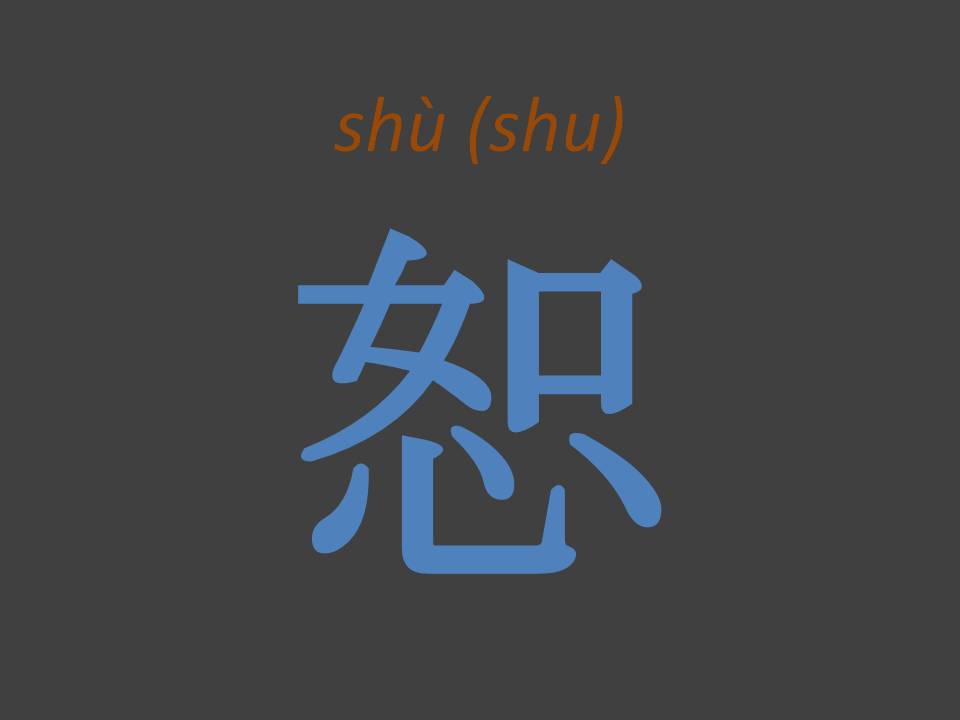
The earliest mention of the Golden Rule in Confucianism is in the Analects, or the Lún Yǔ (论语 or 論語) The Analects, an anthology of Confucian teachings written by the disciples of the sage Confucius over a thirty to fifty years period, was probably written somewhere between 475 and 221 B.C. The Confucian version of the Golden Rule, which is nothing more than an elaboration of the virtue of shù (or shu) (恕), is a central feature of those Confucian teachings, and so it is found in various places in that work. The notion of shù is not only important in Confucius's teachings, but it displayed a remarkable continuity, holding a central role in Confucianism and neo-Confucianism as these doctrines developed over almost two millenia from Confucius to Mencius (371-289 B.C.) to Chu Hsi (Zhū​ Xī​) (1130-1200 A.D.) and beyond. According to Jeffrey Wattles, the Golden Rule plays a tripartite role in Confucianism: it is the means to virtue, it is a symbol of the end of all virtue, and it is a central thread in Confucianism as it developed over many centuries from a simple ethical and social virtue-building teaching without reference to the Absolute, to an ethical doctrine tied to the metaphysical, other-worldly relationship with the Taiji (太极 or 太極), the "Supreme Ultimate." As may be expected from the attention given to the Golden Rule by Confucian doctrine, this notion has been developed in a remarkable manner, and it allows us great insight into this concept which is one tied to the natural moral law.

We turn to Analects 15.23 for the mention of the Golden Rule. Confucius tries to answer his disciple Zi Gong's request for a single word by which he can live his life, a request that Confucius grants by telling him that that single word may be said to be shù (恕). The translation of shù is problematic, as it is a word with no English equivalent, and so it is variously and inadequately translated as "consideration," "reciprocity," "empathy," "altruism," even "forgiveness," among other words.

子貢問曰、有一言、而可以終身行之者乎。子曰、其恕乎、己所不欲、勿施於 人

Tzŭ Kung asked,
"Is there a word with which to act in accordance throughout a lifetime?"
Confucius said,
"It is 'consideration' [shù]. What you do not wish upon yourself, extend not to others."
Analects, 15.23.

As mentioned before quoting this analect, the word shù is difficult to encapsulate in one word (we adopted the word "consideration" as its translation), but Confucius clearly equates it with the Golden Rule in its negative expression: What you do not wish upon yourself, extend not to others. This is shù. It is clearly a relational virtue, one that is only present in a communio between persons. In Buberian terms, shù is something that requires both an I and a Thou.

Shù is a one-word synopsis of the Golden Rule. The concept is self-referent, analogous, and other-regarding. It is other-regarding in that it clearly places other human beings within the scope of its vision. It is analogous, in that it extends one thing to another, the self to the other. It is self-referent, in that in analogizes from the self, and so requires self-knowledge, introspection, the Delphic gnothi seauton, Know yourself. It is thus both intrinsic and extrinsic, in that it both requires us to look within, and to look without. We use our own selves as a mirror, a reflective analogy for understanding what it is that others may find offensive, and, in so doing, we arrive at our standard of behavior. Christians are exhorted to cultivate the attitude in themselves that was also in Christ Jesus (Phil. 2:5). Confucius exhorts his disciples to cultivate the attitude of shù, which is not entirely inconsistent. It may be said that Jesus, who gave his life in sacrifice to man, personified this Confucian virtue. Swas made flesh in Christ Jesus.

The Golden Rule, which is nothing other than
shù, must be understood with the Confucian notion of virtue generally. The notion is not an abstract concept, but it is one highly concrete, albeit one that is nevertheless exceptionless or absolute. Wattles, 16-17. Shù, and likewise the Golden Rule which it encapsulates, has to be understood within the entirety of the Confucian ethical corpus. In fact, in Confucian teaching the notion of shù is inextricably linked with a companion virtue, zhōng (or chung) (忠). Again, the word zhōng, like the word shù, has no English equivalent, but it has often been translated "loyalty," "dedication," or "fidelity." In theAnalects, Tsêng Tzŭ, the disciple of Confucius, explains the Confucian teaching that the virtue of shù is connected to the notion of zhōng (or chung) (忠):


子曰、參乎、吾道一以貫之。曾子曰、唯。子 出、門人問 曰、何謂也。曾子曰、夫子之道、忠恕而已矣

Confucius said,
Ts'an, the way I follow has one unifying principle."
Tsêng Tzŭ said, "Yes."
After Confucius departed, his disciples asked,
"What did he mean?"
Tsêng Tzŭ said,
"The way of the Master is simply loyalty [zhōng] and consideration [shù]."
Analects, 4.15. The one unifying principle, or, as it is often referred to, the "one thread" throughout the entire Confucian ethic, is the single compound thread of zhōng and shù. Shù cannot exist without zhōng, and zhōng cannot exist without shù. In other words, the Golden Rule requires dedication, fidelity, loyalty, habitual cultivation of regard for others, by a habitual cultivation and introspection of self, so that it becomes a matter less of imposition than of spontaneity. One recalls here the parallel with St. John Chrysostom's remarkable phrase regarding the Golden Rule in his thirteenth Sermon Against Statues: "Many words . . . are not necessary, nor laws of great length, nor a diversity of instruction. Let your own will be the law. [Non opus est multis sermonibus, inquit, neque prolixis legibus, nec varia doctrina: voluntas tua sit lex. Οὐ χρεία πολλῶν λόγων, φησὶν, οὐδὲ μακροτέρων νόμων, οὐδὲ διδασκαλίας ποικίλης· τὸ θέλημά σου γενέσθω νόμος.] PG, 49.139-40 (XIII.7)

Further insight into the notions of zhōng and shù may be derived from a study of the Chinese ideogrammatic behind these compound Han characters for these virtues or principles. The Chinese words zhōng and shù are composed of a combination of two characters apiece, an upper and a lower character. The interesting aspect is that they share the same lower character, while only their upper characters are different.


The bottom character of both
zhōng and shù is the character for xīn (or hsin) (心), a broad concept which means mind or heart. The breadth of the notion of xīn is perhaps intimated by the Confucian Mencius's speaking of the heart of compassion, the heart of shame, the heart of courtesy and modesty, the the heart of right and wrong. (Mencius, 2A6) Obviously, the notion of xīn is more complex than a Humean theory of natural impulse, where the intellect is subservient to passion, or some denuded notion of human morality associated with a Kantian reinen praktischen Vernunft, or pure practical reason, where the passions are entirely neglected and duty only virtuous if not enjoyed. While it welcomes the heart, it does not exclude the role of the mind, and so would reject Pascal's notion that the heart has reasons of its own separate and apart of reason. Just like the Catholic Church insists on Faith and Reason, Nature and Supernature, so a Confucian, in his use of the word xīn, would be insisting on the unity of both Mind and Heart.

The upper character for zhōng, 中, also known as zhōng, means "center," while the upper character for shù, 如, , means "like or as." Etymologically, then, zhōng "suggests that the mind or heart, the xīn, is centered," while shù "implies sympathy with the feelings and thoughts of another person, being of like mind and heart," or xīn. Wattles, 17.

In his book on the Golden Rule, Jeffrey Wattles, following the lead of David Nivison, suggests that this combination of zhōng and shù refer to the upper and lower movements of the Golden Rule. That is, the combination of these two virtues is required because in Confucius's view, all have a place in social structures that are hierarchical at least in part, and so acting in accord with the Golden Rule requires adaptation depending upon whether one is acting in reference to a superior, where duty is chief, or in reference to a subordinate, where the exercise of authority or power may be involved. [One may remember here, Peter Abelard's discussion on the Golden Rule and the difficulty of applying it to those in authority in the twentieth problem of his Problemata Heloissae.] Thus zhōng applies to the Golden Rule in reference to a superior (calling for fidelity, loyalty, dedication), wheras shù is in reference to a subordinate, and would demand that one be not overly rigorous in one's demands upon them, and so putting oneself in their place. When dealing with social equals, both virtues blend into one. Wattles, 17-18.

The inculcation of this dual virtue of zhōng and shù is not natural in the sense that it is impulsive or automatic; rather, it requires an intentional effort, a sedulous discipline, to cultivate it as the principal rule of actions. The Analects disclose the short dialogue between Tzŭ Kung and Confucius on just this very natural intransigence to zhōng and shù that exists within us, and must be overcome:

子貢曰、我不欲人之加諸我也、吾亦欲無加諸人。子曰、賜也、非爾所及也。


Tzŭ Kung said, "I do not wish to be imposed upon by others, nor do I wish to impose upon others."
Confucius said, "T'sŭ, that you have not attained."
Analects, 5.11. In the Confucian 3rd century text, Doctrine of the Mean, the Zhōng Yōng (中庸), zhōng and shù are said to be not far from the way or dào (), but it requires cultivation. And if cultivated, the Golden Rule places us upon the right path, the dào.
忠恕違道不遠

Dedication (zhōng) and consideration (shù) are not far from the path (dào).
Doctrine of the Mean, No. 12. When one has both zhōng and shù one is not far from the path or dào. The Confucian emphasis on habitual consideration informs both its notion of the supreme virtue, jen or rén (仁), and the internal activities relating to the exercise and inculcation of that virtue, what is known as p'i.

As Herbert Fingarette explains this concept:
One key word here is p'i, a word used with some frequency in the Analects. Although it is rendered in bi-lingual dictionaries by the English "to compare," the important features of its use in the Analects to which I would direct attention are these: First, p'i in the Analects is always a "comparison" of likenesses, not differences. Hence "analogy" is an appropriate term. Second, the comparison is expressed in terms of imagery, of persons, situations, or activities, not in terms of abstract traits. Hence p'i is characteristic of Confucius' way of teaching . . . It contrasts sharply with the method of abstract analysis . . . Shu, in turn, is a specific kind of p'i. To be able from what is close--i.e., oneself--to grasp analogy with the other person, and in that light to treat him as you would be treated--that is shu.
(quoted in David L. Hall and Roger T. Ames, Thinking Through Confucius (Albany: State University of New York Press, 1987), 287-88.)

One of the supreme virtues of Confucianism is that of jen or rén The Chinese character for rén (仁) depicts a man between heaven and earth, mediating between the two as it were. Alternatively, one may view it is a composite of two characters, one meaning man or person (rén , ), the other meaning the number two (ér,). Wattles, 195 n. 13. Again, one confronts the impossibility of translating this concept adequately with one English word. Variously, terms such as "cohumanity," "humanity," "humaneness," "benevolence," "kindness," or even "love," have been used as approximations for rén. But whatever its precise meaning, the relationship between rén and shù is indisputable. Wattles states: "How is the virtue of cohumanity [rén] expressed, and what is the best path to it? The golden rule is a prominent answer to both questions." Wattles, 18. The linkage between rén and shù is found in the Analects:
子貢曰、如有博施於民、而能濟眾、何如、可謂仁乎。子曰、何事於仁、必也聖乎、堯舜其猶病諸。夫仁者、己欲立而立 人、己欲達而達人。能近取譬、可謂仁之方也已

Tzŭ Kung said,
"If the people are provided for extensively, and helped, what would you say? Can it be considered cohumanity [rén]?
Confucius said,
"What has it to do with cohu
manity [rén]? Surely it is sagacious. Even Yao and Shun [ancient emperors revered by Confucius] found it difficult. As to the man, who practices cohumanity [rén], he establishes for others what he wishes for established for imself. He brings others to reach where he wishes to reach himself. The ability to extend from self to others can be considered the direction towards cohumanity [rén]."
Analects, 6.28. The issue is also broached in Analects 12.2:

仲弓問仁。子曰、出門如見大賓、使民如承大祭、己所不欲、勿施於人、在邦無怨、在家無怨。仲弓曰、雍雖不敏、請事斯語矣。司馬牛問仁。子曰、仁者其言

Chung Kung asked about cohumanity [rén].
Confucius said, "It is, when beyond your door, you conduct yourself as if meeting with a great guest; to employ the people as if you were assisting at a great sacrifice; what you do not wish upon yourself, extend not to others; to have no murmuring against you in the country, and none in the family."
Chung Kung said, "Yung [alternative name for Chung Kung], though I am not quick, may I put into practice this lesson."
Analects, 12.2. In Analects 12.2, therefore, the Golden Rule, and thus shù, is directly made part of the virtue of rén. The virtue of rén relates to all those beyond one's door, and it requires that we consider those we encounter, even the alien and the stranger, as an important guest. It further requires us to handle those in our employ with reverence, as if participating at a great sacrifice. It requires, in sum, the application of the Golden Rule: shù, and we have seen how inextricably intertwined with shù is the requirement that it be made habitual, connatural or spontaneous, through intense but prudent cultivation. The entire teaching is succinctly stated by Mencius: "Be considerate [shù], and you will find that this is the shortest way to cohumanity [rén]." Wattles, 19 (quoting Mencius, 7A4).

It follows that the Confucian emphasis on the Golden Rule and the concomitant requirement that we study "what is near to ourselves," so that we may be able to "extend self to others" has resulted in a well-developed doctrine of moral empathy. Wattles attempts to aggregate the various notions of this in his book on the Golden Rule, and there are some very beautiful images of what such an ethic requires. It goes beyond the mere imagination of oneself in the other's circumstance, and putting oneself in their place. It requires a virtual revolution of the mind and the heart, a cultivation both rational and of fellow-feeling. Perhaps the most vivid image of it is in the
The Great Learning, the Dà Xué (大学 or 大學) one of the traditional "Four Books" of Confucianism, which provides that one should regard another with the same solicitude, and the same connaturality and spontaneity, as a mother to her infant. Wattles, 19. It requires a transferrance of the heart from things that do not warrant it, to our fellow man. So Mencius advised a king who had compassion for his pet ox, but not his people: "[T]ake this very heart here and apply it to what is over there." Wattles, 20 (quoting Mencius, 1A7) That temporal thing we love most, if it is not our fellow man, that desire ought to be translated to the proper object.

The Good Samaritan, by Vincent Van Gogh

One final thing may be mentioned. One would expect that any ethical teachings that are framed in terms of a Golden Rule would tend toward universality, though, as we shall see, the universal tendency can be stymied by culture or positive religious belief, such as it was in the context of the early Greeks, where qualitative differences were made between the Greek and the barbarian, the free man and the slave, and as it is in traditional or fundamentalist interpretations of Islam, where there is one morality for the Dar al Harb (دار الحرب) and another for the Dar al Islam ( دار الإسلا). But this was not the case with Confucian teaching, and as it developed across the centuries it became cosmopolitan and global in its ideal. It had the seeds of universality at the beginning: "All within the four seas," that is everywhere, "are his brothers" the disciple Tzŭ Hsia admonished his fellow disciple Szŭ Ma Niu, who understood brotherhood in too literal, and therefore restrictive, a fashion. Analects, 12.5. The notion progressively expanded during the course of Confucianism so that the neo-Confucian Wang Yangming (1472-1529 A.D.) was able to say that the wise man "regards all the people of the world as his brothers and children." Wattles, 22 (quoting Wang Yangmin's Instructions for Practical Living, I.142.118). Such an ethic strives to be universal, though it yet may confront social, cultural, or accidental conditions that prevent it from expressing itself in an ideal way.

Unquestionably, the Confucian ethic of the brotherhood of man was not founded, like the analogous Jewish or Christian idea, upon all men sharing of the image and likeness of God or all men being children of the one creating God.
[A]t no point in Confucian concept of humankind did the affirmation arise that Heaven is our father and that all men and women are brothers and sisters--and that this realization is the foundation for the replete practice of the golden rule. The Confucian concept of humankind as one family was derived initially not from the faith in a heavenly Parent but from golden ruling comparing, extending to others the consideration that the agent had for his or her own family.
Wattles, 26. That all is true, as far as it goes. But the Confucian ethic does not contradict the Judaeo-Christian notion of the brotherhood of all men arising from a common Father God, though it would seem more focused on the so-called "second tablet" of the Ten Commandments, or the Second Commandment of Christ. But what is truly fascinating is the importation of the well-developed notions of zhōng (loyalty) and consideration (shù) when applied by Chu Hsi in relation to the Supreme Absolute:
Zhōng means 'facing the Lord in Heaven' all day long. . . . Zhōng is the Way of Heaven, shù is the Way of Man. Zhōng means the absence of error; shù is how we put zhōng into practice. Zhōng is t'i (essence or "substance"); shù is yung ("function"). The one is the "great root"; the other is the realized Way.
Wattles, 196 n. 47 (quoting various provisions of Chu Hsi). Here, there seems to have developed both vertical and horizontal notions of zhōng and shù, and this must without question change the tenor of the notion of rén. With Chu Hsi, we are reaching asymptotically, as it were, the limit the other side of which requires that Voegelinian "leap in being" achieved by the revelation of Yahweh to the Jew, and by courtesy of the Jew, the Christian, and, indeed, all men of good will. The Jew and the Christian love their brothers, in whom they see the image of the God they love. The Confucian comes very close to loving an image of God as a result of loving their brother. The achievement of Confucius and his disciples, uninformed by any divine Revelation, is a testament of the law written in the heart of man, and the Golden Rule which the Fathers of the Church have taught is fundamental part and parcel of the natural moral law. It is "testimony of the existence of a patrimony of common moral values shared among all men." Searching for a Universal Ethic (International Theological Commission), I.1, No. 12.

The Golden Rule by Norman Rockwell

Note: Herein, Wattles refers to Jeffrey Wattles, The Golden Rule (Oxford: Oxford University Press, 1996)

Wednesday, April 21, 2010

Schubert on St. Augustine's Teaching on the Eternal Law, Part 15

Augustine's Lex Aeterna Teaching
Its Content and its Source

by: P. Alois Schubert, S.V.D.

Part II
What Sources Inform St. Augustine's Teaching on the Eternal Law?


Heraclitus from the Villa dei papiri, Herculaneo

E. HERACLITUS (536-470 B.C.)

The Stoic teachings regarding the Logos koinos rest at their final end upon the Heraclitean world logos (Weltlogos). Augustine's teaching regarding the eternal law therefore goes back to Heraclitus. We shall investigate now what Heraclitus taught regarding the Logos.

1. Concept of the Logos

According to Heraclitus there is no lasting being. All being flows or is in flux (panta rei).(1). The Logos, the common law (gemeinsame Gesetz), rules in the flow and change of things. All things fulfill themselves in accordance to the Logos. This divine law rules all things; what it wills is sufficient for all things; and it excels all things. This Logos is the common law. In addition to logos, Heraclitus also used the terms: nous, phronesis, gnome, heimarmene, kraunos, pyr, and Zeus. Heraclitus says, for example, "when one wants to talk with reason, one must base himself on the common reason.(3) On this mind is everything common. But Heraclitus places the common reason of the mind above the mind of the individual.(4) To know the know One, from which all things stem, is Wisdom, gnome.(5) Fate therefore is to be accepted.(6) Lightning, which symbolizes the divine fire, is endowed with reason and is the first cause of the governance of the All.(7)

This one and only way is, and is not, to be named with Zeus.(8) Their will of individual should be to follow the law.(9) Heraclitus identifies the expressions logos, nous, phronesis, heirmarmene, pyr, and Zeus. These termini parallel those of Augustine, which shows the relationship between both men's thought:

HERACLITUSAUGUSTINE
1. λόγος κοινός.
λόγος κοινός. S. 57, Anm. 2 and 3.
1. lex est aeterna, lex universalis. S. 5, Anm. 18 and 19.
2. ἑιμαρμένη. S. 57, Anm. 5.
2. ordo causarum, necessitas . S.7, Anm. 8.
3. νους ξὺνος. S. 57, Anm. 1. φρονεῖεν ξυνόν. S. 57, Anm. 3. γνώμην, ὁτέη ἐκυϐέρνησε πάντα. S. 57, Anm. 4.
3. ratio divina. S. 5, Anm. 19. Voluntas Dei ordinem naturalem conservari iubens et perturbaris vetans.


2. Characteristics of the Logos.

Heraclitus calls this law divine. "All human laws nourish themselves from the One, the divine."(10) The Logos is furthermore eternal and all-encompassing.(11) It is the universal law of the world (Weltgestz).(12) All things happen in accordance with this law.(13) It is the cause of the governance of the world.(14) This law branches out only so far as it wills, and it is sufficient for all things, and overcomes all things.(15) It binds all things, in that whoever intends to speak, must be armed with the common law of all, just like a city defends itself with the law, and, indeed, even more strongly so.(16) Even the unjust stands under this law. Dike will straighten injustice; the perjurer and his compurgator will have to contend with Dike.(17)

Heraclitus places upon the Logos the same characteristics as Augustine does upon the eternal law.

HERACLITUSAUGUSTINE
1. νόμος θεος. S. 58, Anm. 10. πῦρ αἰώνιον. S. 58, Anm. 11. λόγος ὥν ἀεὶ. S. 58, Anm. 11.
1. lex ineffabilis, aeterna, sempiterna. S. 6, Anm. 1 and 2.
2. γινομένων πάντων κατὰ τὸν λόγον τόνδε.. S. 58, Anm. 11. Δίκη κατὰ­λήψεται ψευδῶν τέκτονας καὶ μάρτυρας. S. 58, anm. 17.
2. lex universlis. S.7, Anm. 8. bona et mala ordine regi. S. 8, Anm. 10 and 12.


3. The Logos is the Fundamental Source of all Law


a) Out of the Logos stems forth the law of nature, than all things in nature develop themselves in accordance with the law of the Logos.(18) The stars circle in the paths that has been foreordained by the law of the Logos. The sun does not exceed its boundaries, and should it do so, so would the messengers of Justice (the Erinyes of Dike) put it back in its place.(19) The same law rules in the world of the living. The wild and tame animals, the birds, the fish, and the beasts of the land become, flourish, and leave so as the law of God has predetermined.(20) They must follow it as a matter of necessity. Everything that lives is with the whip of God put into pasture.(21)

Man has little understanding regarding this law through which all exists, whether before he begins to question its existence, or after he has learned of it.(22) This law ties together the opposites of in the world into the most beautiful harmony.(23) Such ties are: the whole and the not whole, unity and discordance, consonance and dissonance, and out of all one, and out of all one.(24) The law of nature therefore go right back to the Logos as its source. Augustine follows the same path back to the eternal law.

b) The common law is the norm for the activities of mankind. It is his duty to follow the common Logos. Although the Logos is common, most live as though they have their own knowledge.(25) All must follow this law, but unfortunately not all do. The Logos lives in man.(26) All are given it, so as to know it and to be able to reason.(27) Thinking is the greatest benefit, and Wisdom consists in this: to tell the truth, and to act in accordance with nature, and to listen to it.(28) The Logos in man is therefore the measure of morality. Most men confront the Logos daily, as it is the guide of the All, and still they divide themselves from it. The things with which they daily interact appear to them for that reason foreign.(29) Morality consists therefore in acting in accordance with nature, in acting in accordance with reason, and in acting in congruity with the eternal Logos. The Logos always is in integrally in accordance with itself, therefore all things are good, beautiful, and right. Men, however, do not always act in integrity with the Logos. Therefore, they are divided into those who are just or righteous, and those who are not just or not righteous.(30). The Logos is therefore, according to Heraclitus, the foundational norm of the moral law. With Augustine the lex aeterna is the foundational norm of the moral law.

c) According to Heraclitus, human laws obtain their authority and their binding force from the divine law. Heraclitus writes: "All human law are derived from the one, the divine."(31) The same viewpoint is found in Augustine. Nihil est iustum atque legitimum, quod non ex aeterna lege homines sibi derivaverint.

4. Conclusion of Heraclitus's Teaching on the Logos.

The concept of the Logos governs the Heraclitean philosophy. Heraclitus identifies the logos koinos with the nomos koinos, the nous, the gnome, the heimarmene, the pyr, the keraunos, and with Zeus. Heraclitus indicates the Logos to be some eternal, divine, and universal. The evil themselves are beneath the Logos. The Logos is the foundational norm of all temporal laws, the law of nature, the moral law, and the law of the State.

We have seen how the lex aeterna of Augustine in part corresponds to the Heraclitean world logos. The fact that these two use same or similar terminology and the same or similar ways of thinking shows that in the fundamental root shows that Augustine's teaching on the lex aeterna is to be found in Heraclitus. The Stoa, Plotinus, and Cicero are the bridges between Heraclitus and Augustine.

CONCLUSION

We are now at the end of our investigation. Let us look one more time to the back to the entire issue.

In the first part we saw what Augustine taught by the eternal law. We learned its definition, its characteristics. We saw how it was that the eternal law was the foundational norm of all temporal laws, the law of nature, the moral law, the law of the State. Finally, we were made familiar with the knowability of the eternal law.

In the second part we investigated the sources of Augustine which impressed themselves upon Augustine's teaching, and upon which it was dependent. Cicero, Plotinus, St. Paul, St. John, the Stoa, and Heraclitus were identified as sources. The investigation revealed a direct reliance of Augustin in his teaching upon Cicero, Plotinus, St. Paul, and St. John, and an indirect reliance upon the Stoa and Heraclitus.

The same or similar terminology, the same or similar ways of thinking in the development of the temporal law from the eternal law, the familiarity that Augustine had with Cicero, Plotinus, St. Paul, and St. John, as well as his knowledge of the Stoa and Heraclitus through Cicero and Plotinus are the sources as well as grounds upon which Augustine relied upon and left their impressions upon his teaching on the Lex aeterna.

____________________


(1) Vgl. Fr. Überweg, Grundriß der Geschichte der Philosophie des Altertums. Bd. I, S. 66-75. Ausgabe Praechter, Berlin 1920.
(2) Diels, H., Die Fragmente der Vorsokratiker, Berlin 1903, S. 82, No. 114. ξὺν νῶι λέγοντας ἰσχυρίζεσθαι χρὴ τῶι ξυνῶι πάντων, ὅκωσπερ νόμωι πόλις, καὶ πολὺ ἰσχυροτέρως. τρέφονται γὰρ πάντες οἱ ἀνθρώπειοι νόμοι ὑπὸ ἑνὸς τοῦ θείου· κρατεῖ γὰρ τοσοῦτον ὁκόσον ἐθέλει καὶ ἐξαρκεῖ πᾶσι καὶ περιγίνεται. Diels 66, No. 1. γινομένων γὰρ (πάντων) κατὰ τὸν λόγον τόνδε
(3) Diels, 82 No. 114. ξὺν νόῳ λέγοντας ἰσχυρίζεσθαι χρὴ τῷ ξυνῷ πάντων.
(4) Diels, 82, No. 113, Ξυνόν ἐστι πᾶσι τὸ φρονεῖν.S. 66, No. 2. ἰδίαν ἔχοντες φρόνησιν.
(5) Diels, 73, No. 41. εἶναι γὰρ ἓν τὸ σοφόν, ἐπίστασθαι γνώμην, ὁτέη ἐκυϐέρνησε πάντα διὰ πάντων.
(6) E. Kl. I 178 n. Anathon Aall. S. 51, Anm. 2.
(7) Cf. Diels S. 75, No. 64.
(8) Diels S. 72, No. 32. ἓν τὸ σοφὸν μοῦνον λέγ­εσθαι οὐκ ἐθέλει καὶ ἐθέλει Ζηνὸς ὄνομα.
(9) Diels S. 72, No. 33. νόμος καὶ βουλῇ πείθεσθαι ἑνός.
(10) Diels S. 82, No. 114. τρέφονται γὰρ πάντες οἱ ἀνθρώπειοι νόμοι ὑπὸ ἑνὸς τοῦ θείου.
(11) Diels S. 75, No. 64. τὰ δὲ πὰντα οἰακίζει κεραυνός, τουτέστι κατευθύνει, κεραυνὸν [τὸ πῦρ λέγων τὸ αἰώνιον]. Diels S. 66, No. 1. (τοῦ δὲ) λόγου τοῦδ᾽ ἐόντος (ἀεὶ).
(12) Diels S. 66, No. 2. διὸ δεῖ ἕπεσθαι τῷ (ξυνῷ, τουτέστι τῷ) κοινῷ· ξυνὸς γὰρ ὁ κοινός. τοῦ λόγου δὲ ἐόντος ξυνοῦ.
(13) Diels S. 66, No. 1. γινομένων γὰρ (πάντων) κατὰ τὸν λόγον τόνδε.
(14) Diels S. 75, No. 64. [εἶναι] τὸ πῦρ καὶ τῆς διοικήσεως τῶν ὄλων αἴτιον.
(15) Diels S. 82, No. 114. κρατεῖ γὰρ τοσοῦτον ὁκόσον ἐθέλει καὶ ἐξαρκεῖ πᾶσι καὶ περὶγίγνεται.
(16) Ibidem. ξὺν νόῳ λέγοντας ἰσχυρίζεσθαι χρὴ τῷ ξυνῷ πάντων, ὃκωσπερ νόμῳ πόλις, καὶ πολὺ ἰσχυροτέ­ρως.
(17) Diels S. 71, No. 28. καὶ μέντοι καὶ Δίκη κατὰ­λήψεται ψευδῶν τέκτονας καὶ μάρτυρας.
(18) Diels S. 66, No. 1. γινομένων γὰρ (πάντων) κατὰ τὸν λόγον τόνδε.
(19) Diels S. 79, No. 94. Ἥλιος γὰρ οὐχ ὑπερϐήσεται [τὰ] μέτρα· εἰ δὲ μή, Ἐρινύες μιν Δίκης ἐπίκουροι ἐξευρήσουσιν.
(20) Diels S. 68, No. 11. τῶν τε ζώιων τά τε ἄγρια καὶ ἥμερα τά τε ἐν ἀέρι καὶ ἐπὶ γῆς καὶ ἐν ὕδατι βοσκόμενα γίνεταί τε καὶ ἀκμάζει καὶ φθείρεται τοῖς τοῦ θεοῦ πειθόμενα θεσμοῖς.
(21) Ibidem. πᾶν γὰρ ἑρπετὸν (θεοῦ) πληγῇ νέμεται, ὥς φησιν Ἡράκλειτος.
(22) Diels S. 16, No. 1. (τοῦ δὲ) λόγου τοῦδ᾽ ἐόντος (ἀεὶ) ἀξύνετοι γίγνονται ἄνθρωποι καὶ πρόσθεν ἢ ἀκοῦσαι καὶ ἀκούσαντες τὸ πρῶτον.
(23) Diels S. 67, No. 8. τὸ ἀντίξουν συμφέρον καὶ ἐκ τῶν διαφερόντων καλλίστην ἁρμονίαν καὶ πάντα κατ᾽ ἔριν γίνεσθαι.
(24) Diels S. 68, No. 10. συνάψιες ὅλα καὶ οὐχ ὅλα, συμφερόμενον διαφερόμενον, συνᾷδον διᾷδον, καὶ ἐκ πάντων ἓν καὶ ἐξ ἑνὸς πάντα . . .
(25) Diels S. 66, No. 2. διὸ δεῖ ἕπεσθαι τῷ (ξυνῷ, τουτέστι τῷ) κοινῷ· . . . τοῦ λόγου δὲ ἐόντος ξυνοῦ ζώουσιν οἱ πολλοὶ ὡς ἰδίαν ἔχοντες φρόνησιν.
(26) Diels S. 52, No. 115. ψυχῆς ἐστι λόγος.
(27) Diels S. 82, No. 116. ἀνθρώποισι πᾶσι μέτεστι γινώσκειν ἑωυτοὺς καὶ φρονεῖν.
(28) Diels S. 81, No. 112. τὸ σωφρονεῖν ἀρετὴ μεγίστη, καὶ σοφίη ἀληθέα λέγειν καὶ ποιεῖν κατὰ φύσιν ἐπαίοντας.
(29) Diels S. 77, No. 72. ᾧ μάλιστα διηνεκῶς ὁμιλοῦσι λόγῳ τῷ τὰ ὅλα διοικοῦντι, τούτῳ διὰ­φέρονται, καὶ οἷς καθ΄ ἡμέραν ἐγκυροῦσι, ταῦτα αὐτοῖς ξένα φαίνεται.
(30) Diels S. 82, No. 114. τρέφονται γὰρ πάντες οἱ ἀνθρώπειοι νόμοι ὑπὸ ἑνὸς τοῦ θείου.

Schubert on St. Augustine's Teaching on the Eternal Law, Part 14

Augustine's Lex Aeterna Teaching
Its Content and its Source

by: P. Alois Schubert, S.V.D.

Part II
What Sources Inform St. Augustine's Teaching on the Eternal Law?


Bust of the Stoic Philosopher Chrysippus of Sol (ca. 278-206 B.C.)

D. THE STOA (336-207 B.C.)
(continued)

2. Attributes of the Common Law According to the Stoa.

a) Cleanthes calls this law the eternal applicable law. He writes in his hymn: "For the entirety of existence there is an eternal and subsisting law."(16) This law governs the things of the world and is eternal, just like Zeus himself.(17)

b) This law is, further, unchanging, in that it stays always one and the same.(18) It is right Reason which impresses itself upon and rules all things.(19)

c) This law is ultimately universal. Zeus rules the All by this law.(20) Even the evil are rejected and are confined back to it. The disorderly he brings into order, and the unlovely he makes lovely. You, O Zeus, sings Cleanthes, lead the law, the common, which impresses upon all things. You reign in your greatest power as the highest Lord of the entire world. Without you, Ruling Lord, nothing in the All occurs.(21) Even the deeds of the sinners, evil, you know, in your wisdom, how to even. The disorderly you place back into order, and the unlovely you make lovely."(22) Therefore everything, the orderly and disorderly, good and evil, is under the common law. It is therefore universal in the widest sense of that term.

Note well: the Stoics did not teach that the evil were destroyed by the common law. By this clarification they generally drew back to theodicy. Compare Anathon Aall in his The History of the Logos Idea (Die Geschichte der Logosidee) [Leipzig 1896].

The Stoa placed on the Logos the same qualities as Augustine did on the eternal law. Even here Augustine stands under a stoic influence.

STOAAUGUSTINE
1. λόγον αἰὲν ἐόντα. S. 52, Anm. 16.
λόγον καὶ ἐόντα ἀΐδιον
1. lex est aeterna, sempiterna, perpetua. S. 63, Anm. 1 and 2.
2. νόμου μέτα πάντα κυβερνῶν. S. 52, Anm. 20.
2. lex est universalis. S.7, Anm. 8 and S. 8, Anm. 10 and 12.


3. The Logos koinos is the Fundamental Norm of all Laws


The Stoics linked justice upon the natural law. They taught that justice or right has its wellspring not as a result of any human warrant, but as an outflow of reason be that from nature.(22) According to Chrysippus, there is no other wellspring for right that may be found, no other path other than that of Zeus and the common nature. From there must all human law find its source if we want to talk in terms of good and evil.(24) This common law is the king of all divine and human things, the dominant ruler of the good and the ugly, the most-high guide from which nature commands what things are permitted, what prohibited, and what is allowed in terms of political custom, and thereby is the norm and measure of justice and injustice.(25) The measure for good and evil, for the just and unjust is also the common law. All right and law, the law of nature, the moral law, and the law of the state all point backwards to the Logos orthos. Looking at these individually, we get the following picture:

a) The Law of Nature stems from the Logos koinos

The Logos impresses itself upon all things of this world.(26) Certainly, the Logos is but one.(27) It divides itself, however, in myriad subordinated rational individuals, the logoi spermatikoi. These rational seeds are the cause of the always renewing individuals, the never corrupting forms, the measure of propriety, the measure, the relationship, the beauty, the order, and the security of all earthly things.(28) The Logoi spermatikoi are the primary moving powers for the Stoic diakosmesis, the world environment (Weltausstattung). The Logos koinos can appropriately divide itself into are myriad of appropriate displays of its power. Through this principle the world is created and holds together.(29) The innumerable laws of of individual things run together into the one eternal law. Felicitously, there is preserved in an Armenian text alone some of the writing of the Stoic Poseidonius which deals with the role of the Logoi spermatikoi in the underlying law of things. In that text it says: "The earth does not stop in bringing forth the same plants. The heavens continues in its unending order. Sun, moon, and the stars overhead do not vary from their joint paths. The sea does not overstep its indicated boundaries. The creatures of the waters, the creatures of the air, the creatures of the land live in fidelity to their tasks; only man, that has authority over all things, is entrusted with the quality of freedom, and is able to disregard Providence and neglect the law of what is right."(30) The Logoi spermatikoi express themselves as the power that holds together all inorganic things, (hexis) as the physis of organic things, as psyche in the things that live, and as nous in mankind.(31) These laws run together into the one Logos orthos to the most high God.(32) In this manner the Stoics the natural law upon the eternal law. The Stoic manner of thinking about the derivation of the temporal law, especially the natural law, is the same as that in Augustine.

STOAAUGUSTINE
1. The Stoa derived all right and law back to the Logos koinos: οὐδὲ γάρ ἐστιν εύρεΐν της δικαιοσύνης ἄλλης ἄρκὴν . . . ἤ τὴν ἐκ τοῦ Διὸς καὶ τὴν ἐκ τὴς κοινὴς φύσεως. S. 53, Anm. 241. Augustine derived the inner order of things (the natural law) from the divine wisdom and righteousness. S. 9, Anm. 3 and 4.
2. The Stoa derived the Logoi spermatikoi back to the Logos koinos tes physeos. Οἱ Στωικοί νοερὸν θεὸν ἀποφαίνονται πῦρ τεκνικον ὁδῶ βαδίζον ἐπὶ γένεσιν κόσμου ἐμπεριειληφὸς πάντας τους σπερματικούς λόγους, καθ’οὓς ἕκαστα καθ’ ειρομένην γίνεται. Diels, Doxographi Graeci 1879, S. 305.
2. Augustine derived the rationes seminales (the literal translation of Logoi spermatikoi) upon the divine power and wisdom.
Aug., PL 34, lib. 9, 17. Potestas creatoris habet apud se posse de his omnibus aliud facere, quam eorum quasi seminales rationes habent.
Aug., De gen. ad lit. PL 34, lib. X, 20; lib. X, 21.
Vgl. Hans Meyer, Geschichte der Lehre von den Keimkräften, Bonn 1914, S. 63ff.
Aug. in Heptat, II, 21. Insunt enim corporeis rebus per omnia elementa mundi quaedam occultae seminariae rationes, quibus cum data fuerit opportunitas temporalis atque causalis, prorumpunt in species debitas suis modis et finibus.


b) The Logos koinos is the principal source of the moral law.

Chrysippus teaches expressly: "There is simply no other source and background for justice that may be found other than Zeus and the common nature.(33) Nature and reason are the only measure for good and evil. Reason tells everyone what he should do and what he ought to avoid.(34) The highest morality is equivalent to living according to nature, that is reason."(35) Ergo the famous Stoic canon: "One must live according to Nature, that is to say Reason."(36) Living a life in accordance with reason is, at the final end, life in accordance with the Logos koinos. From this Logos, man takes a part in through reason, which he obtains by nature. The part of him that is reason lives in him as Logos andiathetos.(37) According to the Stoics, the moral law also is based upon the Logos koinos. Augustine holds that the moral law is innate. God writes it in the heart of man. The Stoa and Augustine both trace back the moral law to the divinity.

c) The Logos koinos is the Fundamental Norm of the Laws of the State.

The common law ties both the gods and men. Both use the world as a common home.(38) Cleanthes prays to Zeus from there: "Your progeny are we and part of your form, all which lives and is composed to die on earth."(39) Man and God are bound by the same law, and so it naturally follows that human laws, the laws of the State, must be arranged to conform to the One, the divine one. This is so because justice has its source, not in human law, but in the outflow from reason, that is nature.(40). Augustine derives in the same way the law of the State from the eternal law. Nihil esse iustum atque legitimum quod non ex aeterna lege homines sibi derivaverint.

d) Conclusion regarding the Stoic teaching on the Logos.

The concept of the Logos is at the center of the Stoic philosophy. The concepts of taxis, heimarmene, pronoia, physis koine, logos orthos, nomos koinos become in many cases synonymously used. The Stoics name the Logos eternal and universal. The evil are under the law of the Logos. The law of nature, the moral law, the law of the State all are derived from that source. The same or similar termini and manners of thinking in Augustine show the reliance of Augustine on the Stoa. Cicero and Plotinus are Augustine's bridge to them.

____________________


(16) v. Arnim, Joh. St. v. fr. I, No. 537. ὥσθ’ ἕνα γίγνεσθαι πάντων λόγον αἰὲν ἐόντα . . .
(17) v. Arnim, Joh. St. v. fr. II, No. 300. τοῦτον γὰρ ἀΐδιον ὄντα διὰ πάσης αὐτῆς (= τῆς ύλης) δημιουργεῖν ἕκαστα.
(18) v. Arnim, Joh. St. v. fr. I, No. 537. λόγον αἰέν ἐόντα . . .
(19) v. Arnim, Joh. St. v. fr. I, No. 162. ὀρθὸς λόγος, διὰ πάντων ἐρχόμενος . . .
(20) v. Arnim, Joh. St. v. fr. I, No. 537. Ζεῦ, φύσεως ἀρχηγέ, νόμου μέτα πάντα κυβερνῶν, χαῖρε . . .
(21) v. Arnim, Joh. St. v. fr. I, No. 537. σὺ κατευθύνεις κοινὸν λόγον, ὃς διὰ πάντων
φοιτᾷ, μιγνύμενος μεγάλῳ μικροῖς τε φάεσσιν ᾧ σὺ τόσος γεγαὼς ὕπατος βασιλεὺς διὰ παντός. οὐδέ τι γίγνεται ἔργον ἐπὶ χθονὶ σοῦ δίχα, δαῖμον . . . πλὴν ὁπόσα ῥέζουσι κακοὶ σφετέραισιν ἀνοίαις . . .

(22) v. Arnim, Joh. St. v. fr. I, No. 537. ἀλλὰ σὺ καὶ τὰ περισσὰ ἐπίστασαι ἄρτια θεῖναι, καὶ κοσμεῖν τἄκοσμα, καὶ οὐ φίλα σοὶ φίλα ἐστίν .
(23) v. Arnim, Joh. St. v. fr. III, No. 308. φύσει δὲ τὸ δίκαιον είναι καὶ μὴ θέσει ὡς καὶ τὸν ὀρθὸν λόγον καθάφησι Χρύσιππος ἐν τῷ περὶ τοῦ καλοῦ. . .
(24) v. Arnim, Joh. St. v. fr. III 326. Χρύσιππος ἐν τῴ περί θεῶν οὐ γὰρ ἐστίν εὑρείν τὴς δικαιοσύνης ἀλλην ἄρκὴν, οὐδέ ἀλλην γένεσιν ἤ τὴν ἐκ τοῦ Διὸς καὶ τὴν ἐκ τὴς κοινὴς φύσεως ἐντεῦθεν γὰρ δεῖ πᾶν τὸ τοιοῦτον τὴν ἀρχὴν ἔχειν, εἰ μέλλομεν ὀρθῶς τι ἐρεῖν περὶ ἀγαθῶν καὶ κακῶν.
(25) v. Arnim, Joh. St. v. fr. III, No. 314. ὁ νόμος παντων ἐστί βασιλεὺς ϑείων τε καὶ ἀνϑρωπίνων πραγμάτων, δεῖ δὲ αὐτὸν προστάτην τε εἶναι τῶν καλῶν καὶ τῶν αἰσχρῶν καὶ ἄρχοντα καὶ ἡγεμόνα καὶ κατὰ τοῦτο κανόνα τε εἶναι δικαίων καὶ ἀδίκων καὶ τῶν φύσει πολιτικῶν ζῴων προστακτικὸν μὲν ὧν ποιητέον ἀπαγορευτικὸν δὲ ὧν οὐ ποιητέον . . .
(26) v. Arnim, Joh. St. v. fr. I, No. 162. ὁ νόμος ὁ κοινός, ὅσπερ ἐστὶν ὁ ὀρθὸς λόγος, διὰ πάντων ἐρχόμενος . . .
(27) v. Arnim, Joh. St. v. fr. II, No. 1128. ὡς μέν οἱ Στωϊκοί λέουσιν εἰς τε ἐστὶν ὁ λόγος καὶ ἤ αυτή πάντως διανοίησις.
(28) Vgl. Anathon Aall, Geschichte der Logosidee, Bonn 1914, S. 129.
(29) Stobaeus, Ecl. I 374 and Anathon Aall S. 129. καὶ ὥσπερ τίνες λόγοι των μερών εις σπέρμα συνιόντες μίγνονται καὶ αύθις διακρίνονται γινομένων των μερών οὗτος ἐξ ενόζ τε πάντα γίνεσθαι και εκ πάντων εις ἐν συγκρίνεςθαι.
(30) Anathon Aal, Geschichte der Logosidee, Bonn 1914, S. 129. Sol et luna ceteraeque stellae a cedenti cursu non cessant, mare regulam mandati non excedit, aquatilia, volatilia et terrestria debitis officiis non desunt, solus libertate praeditus mundi civis homo, cui etiam principatus imperialis concessus fuit, talis, inquam, providentiam, dimisit, legemque iustitiae neglexit.
(31) Cf. v. Arnim, Joh. St. v. fr. II, No. 708, nos. 773-911, I nos. 134-151, nos. 518-526.
(32) St. v. fr. I 537. Ζεῦ φύσεως ἀρχηγέ, νόμου μετὰ πάντα κυβερνῶν. St. v. f. III 326. οὐδὲ γάρ ἐστιν εύρεΐν της δικαιοσύνης ἄλλης ἄρκὴν ἤ τὴν ἐκ τοῦ Διὸς καὶ τὴν ἐκ τὴς κοινὴς φύσεως.
(33) v. Arnim, Joh. St. v. fr. III, No. 326. Χρύσιππος ἐν τῴ περί θεῶν οὐ γὰρ ἐστίν εὑρείν τὴς δικαιοσύνης ἀλλην ἄρκὴν, οὐδέ ἀλλην γένεσιν ἤ τὴν ἐκ τοῦ Διὸς καὶ τὴν ἐκ τὴς κοινὴς φύσεως .
(34) v. Arnim, Joh. St. v. fr. III, No. 314. [νόμον] κανόνα τε εἶναι δικαίων καὶ ἀδίκων καὶ τῶν φύσει πολιτικῶν ζῴων προστακτικὸν μὲν ὧν ποιητέον ἀπαγορευτικὸν δὲ ὧν οὐ ποιητέον.
(35) v. Arnim, Joh. St. v. fr. I, No. 179. Διόπερ πρῶτος ὁ Ζήνων ἐν τῷ Περὶ ἀνθρώπου φύσεως τέλοςεἶπε τὸ ὁμολογουμένως τῇ φύσει ζῆν, ὅπερ ἐστὶ κατ' ἀρετὴν ζῆν·ἄγει γὰρ πρὸς ταύτην ἡμᾶς ἡ φύσις.
(36) v. Arnim, Joh. St. v. fr. I, No. 179. τὸ δε τέλος ὁ μὲν Ζήνων οΰτως ἀπέδωκεν τὸ ὁμολογουμένως ζῆν τούτο δ' εστί καθ' ένα λόγον ζῆν καὶ σύμφωρον ζῆν.
(37) De plac. phil. III 11. 900 B. Οἱ Στωϊκοί φασιν· ὅταν γεννηθῇ ὁ ἄνθρωπος, ἔχει τὸ ἡγεμονικόν μέρος τῆς ψυχῆς. St. v. fr. II 837. ἡγεμονικόν δὲ εἶναι τὸ κυριώτατον τῆς ψυχῆς.
(38) Stobaeus, Ecl. I 444. Χρύσιππος κόσμον ἔναι τὸ ἐκ τῶν θεῶν καὶ ἀνθρώπων καὶ σύστημα τῶν ἕνεκα τοῦτον γεγονότον. . . cf. Cicero, De finibus bon. et mal. III 20, 27.
(39) v. Arnim, Joh. St. v. fr. I, No. 537. Έκ σου γάρ γένος είσ' ήχου μίμημα λαχόντες. μούνοι, όσα ζώει τε και έρπει θνήτ' έπί γαίαν.
(40) v. Arnim, Joh. St. v. fr. III, No. 308. φύσει δὲ τὸ δίκαιον είναι καὶ μὴ θέσει . . .